
What Is Boondocking
Boondocking (also called dry camping or dispersed camping) means parking your RV without hookups: no shore power, no water, no sewer. You carry everything. BLM land in the Southwest, National Forest roads in Colorado, and overflow areas outside popular national parks are the classic spots.
Power is the main limiting factor for comfort. A gas generator solves the electrical problem but creates others: noise restrictions, fumes, fuel logistics, and generator bans in many popular boondocking areas. Portable power stations changed the equation. They are silent, produce no fumes, and recharge from solar panels during the day. The trade-off is finite capacity. Understanding exactly how much battery and solar you need is the difference between a comfortable week off-grid and a dead station on day three.
This article covers the sizing math. For station recommendations by feature and budget, see our RV camping buying guide. For a general introduction to station sizing, see our how to size a power station guide.
Know Your Daily Load
Every boondocking power plan starts with the same question: how many watt-hours do you consume per day?
Daily energy consumption
Daily Wh = Sum of (Device watts × Hours per day × Duty cycle)
We built four load profiles using real device data from our database. These use typical camping draws, not worst-case ratings. That distinction matters.
| Profile | Devices | Daily Wh |
|---|---|---|
| Minimalist | Phone charger (15W × 2h) + LED lights (10W × 5h) | ~80 Wh |
| Weekend Warrior | Cooler (50W × 0.40 duty × 24h) + Fan (40W × 8h) + Phone (15W × 2h) + Lights (10W × 5h) | ~880 Wh |
| Weekend + CPAP | Above + CPAP (56W × 8h) | ~1,330 Wh |
| Full-timer (no AC) | Cooler (50W × 0.40 × 24h) + Fan (40W × 8h) + Laptop (65W × 0.80 × 6h) + Phone (15W × 2h) + Lights (10W × 5h) + TV (50W × 4h) | ~1,390 Wh |
A few things to understand about these numbers.
The cooler is the largest sustained load in camp. A Dometic CFX3 35 draws 50W when the compressor runs, but the compressor cycles on and off. At a 40% duty cycle the average draw is 20W, but that adds up over 24 hours: 480 Wh per day. For a deeper analysis of cooler runtime, see our cooler vs fridge runtime guide.
The CPAP is the single largest overnight load for most boondockers. A ResMed AirSense 11 draws 56W continuously for 8 hours: 448 Wh per night. That one device nearly doubles the weekend warrior profile. For station pairings, see our best stations for CPAP page.
Laptop wattage deserves a careful note. Our device database uses 360W (the Alienware m18 R2 adapter rating) as the worst case for compatibility testing. A typical ultrabook actually draws 45 to 65W during normal use, not the adapter ceiling. For energy planning, use the real system draw.
Sizing Your Battery
The battery needs to store enough energy to cover your daily load after accounting for real-world efficiency losses.
Minimum battery capacity
Minimum capacity = Daily Wh / 0.70 (real-world derate)
The 0.70 derate accounts for inverter efficiency (DC to AC conversion loses roughly 10 to 15%), temperature effects on lithium cells (cold nights reduce available capacity), and battery age (capacity degrades over charge cycles). This is the same factor we use across all our runtime calculations.
The “recommended” column adds one full day of reserves: enough to survive a cloudy day where solar harvest drops to near zero.
| Profile | Daily Wh | Min Battery (÷ 0.70) | Recommended (+ 1 cloudy day) |
|---|---|---|---|
| Minimalist | 80 | 115 Wh | 230 Wh |
| Weekend Warrior | 880 | 1,257 Wh | 2,137 Wh |
| Weekend + CPAP | 1,330 | 1,900 Wh | 3,230 Wh |
| Full-timer (no AC) | 1,390 | 1,986 Wh | 3,376 Wh |
For weekend trips with clear weather forecasts, the minimum column is often sufficient. For extended stays or unpredictable weather, the recommended column is the safer target.
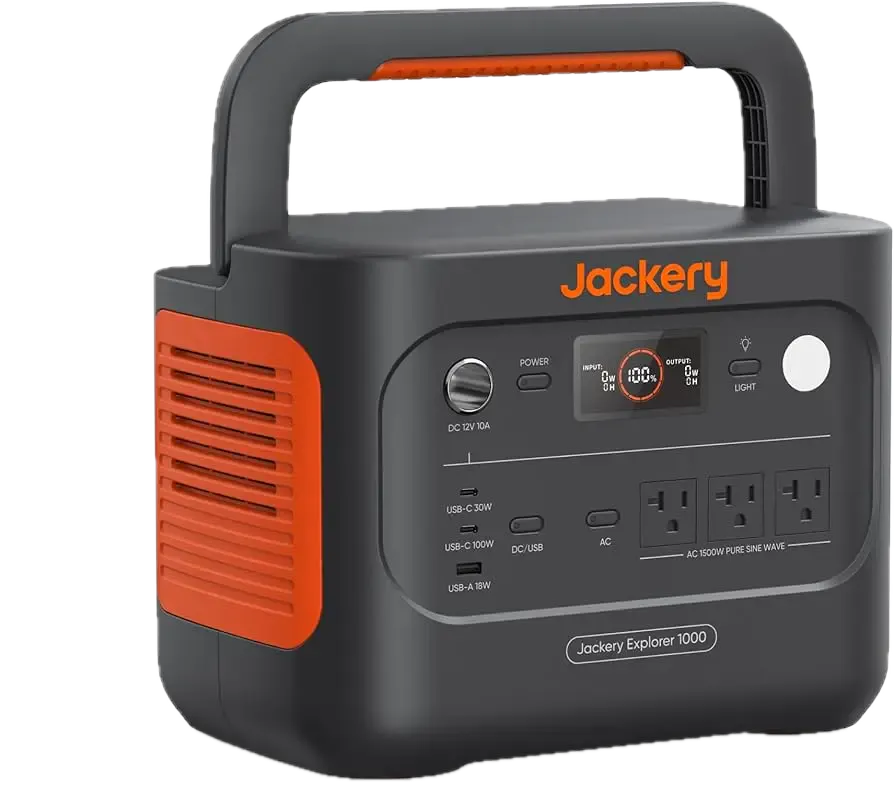
Jackery Explorer 1000 v2
1,070 Wh. Covers the minimalist profile with room to spare. For the weekend warrior at 880 Wh/day, it provides just over one day of autonomy before solar needs to take over. A single 100W panel harvests about 420 Wh/day in the Southwest (100 × 0.70 × 6), covering only 48% of the load. You need 200W of panels to approach break-even at this capacity tier. Accepts up to 200W of solar input.
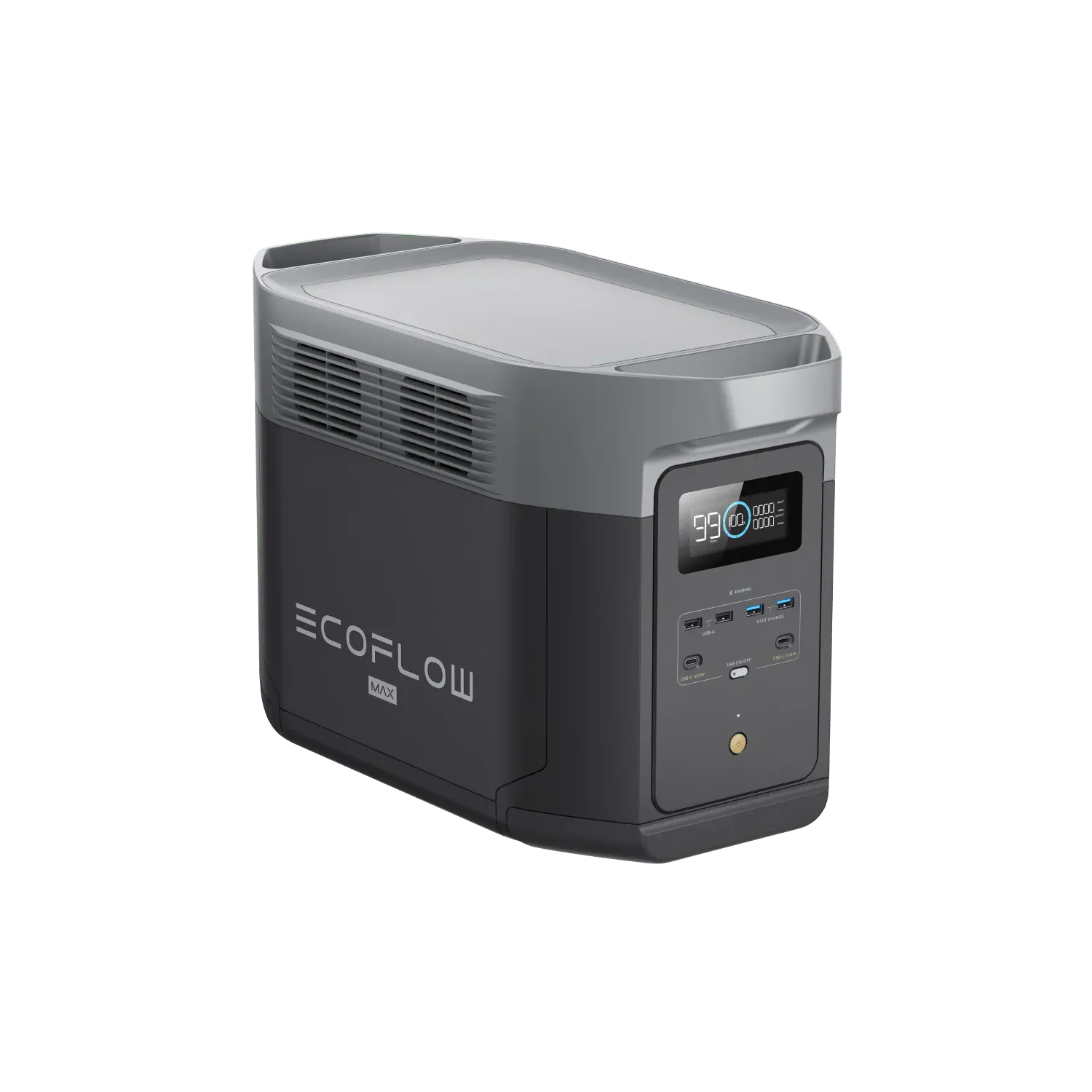
EcoFlow DELTA 2 Max
2,048 Wh. Covers the weekend warrior profile (880 Wh/day) within its derated capacity of 1,434 Wh, giving you one full day plus margin. Adding an overnight CPAP (448 Wh/night) pushes the daily total to 1,330 Wh, leaving only 104 Wh of buffer. You need solar recharging during the day to sustain a multi-day trip. Accepts up to 500W of solar input.
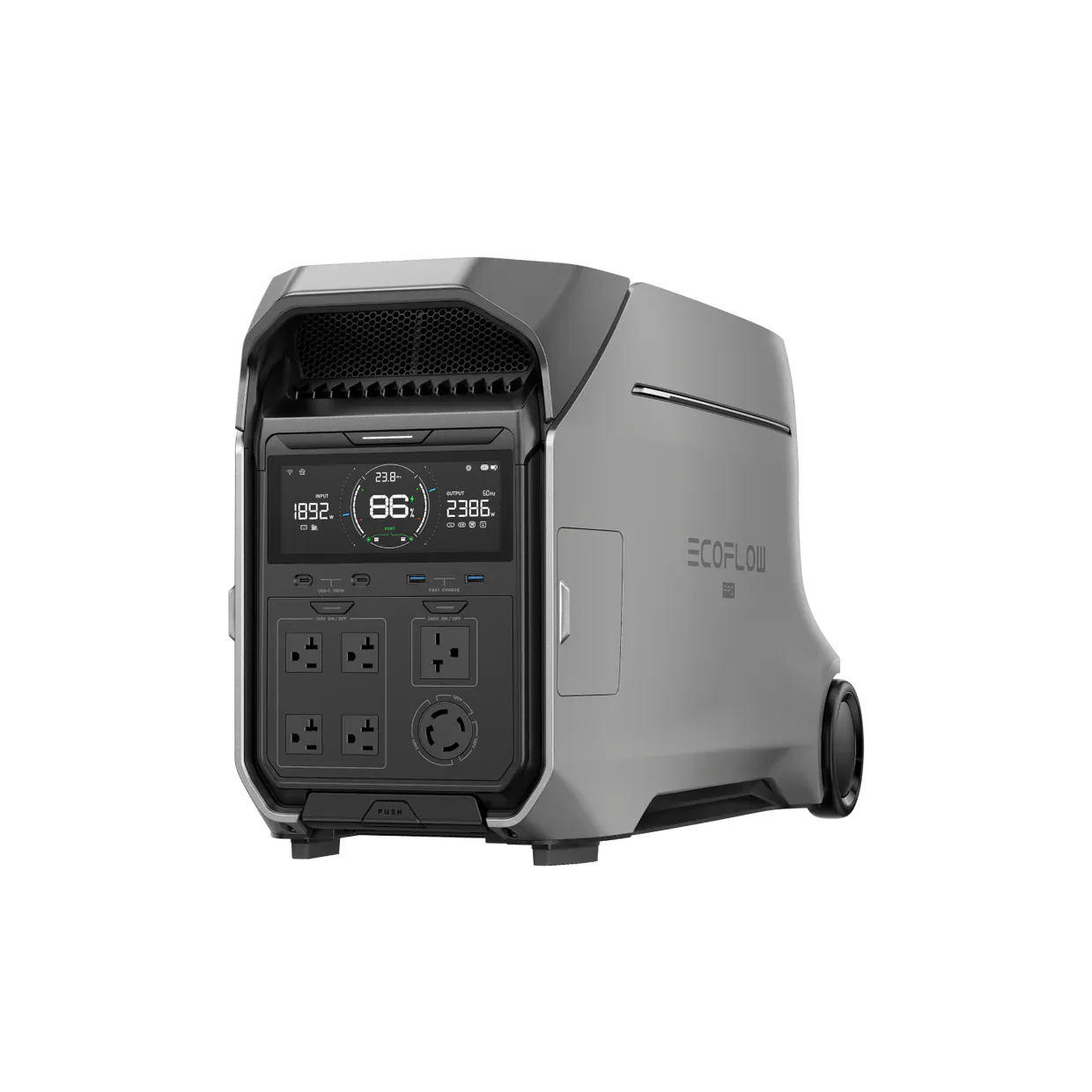
4,096 Wh. Covers the full-timer profile (1,390 Wh/day) with about two days of autonomy after derate (4,096 × 0.70 = 2,867 Wh usable, roughly 2.06 days). Expandable to 8,192 Wh with an extra battery, doubling that to four days. Accepts up to 1,600W of solar input, making it the most capable solar charging platform in this tier.
Sizing Your Solar
Solar panels replenish the battery during daylight hours. The goal is to harvest enough watt-hours per day to offset your daily consumption.
Minimum solar panel wattage
Panel watts = Daily Wh / (0.70 derate × Peak sun hours)
The 0.70 derate on solar accounts for real-world losses: panel temperature, angle, partial shading, cable resistance, and MPPT controller efficiency. A 200W panel does not produce 200W sustained. It produces roughly 140W in real conditions.
Peak sun hours vary by region and season. This is the critical variable that most boondocking guides gloss over.
| Region | Peak Sun Hours (Summer) | Peak Sun Hours (Winter) |
|---|---|---|
| Southwest (AZ, NM, NV) | 6 to 7 | 4 to 5 |
| Southeast (FL, TX, GA) | 5 to 6 | 3 to 4 |
| Midwest (CO, KS, MO) | 5 to 6 | 3 to 4 |
| Pacific NW (WA, OR) | 4 to 5 | 2 to 3 |
| Northeast (NY, PA, ME) | 4 to 5 | 2 to 3 |
Data sourced from the NREL National Solar Radiation Database. Use our solar charge time calculator for site-specific estimates.
Here is what the sizing looks like across profiles and locations. We use 6 PSH for Southwest summer and 2 PSH for Pacific Northwest winter as the best and worst cases.
| Profile | Daily Wh | Panels Needed (SW Summer, 6 PSH) | Panels Needed (PNW Winter, 2 PSH) |
|---|---|---|---|
| Minimalist | 80 | 20W (any small panel) | 60W |
| Weekend Warrior | 880 | 210W | 630W |
| Weekend + CPAP | 1,330 | 320W | 950W |
| Full-timer (no AC) | 1,390 | 335W | 995W |
The Weekend Warrior example: 880 Wh ÷ (0.70 × 6) = 210W minimum panel wattage. A single 220W panel covers it in Arizona summer. That same profile in Oregon in January needs 630W of panels, three times more hardware for the same load.
For a deeper dive on panel technology, wiring configurations, and compatibility with specific stations, see our solar panel guide and our series vs parallel wiring guide.
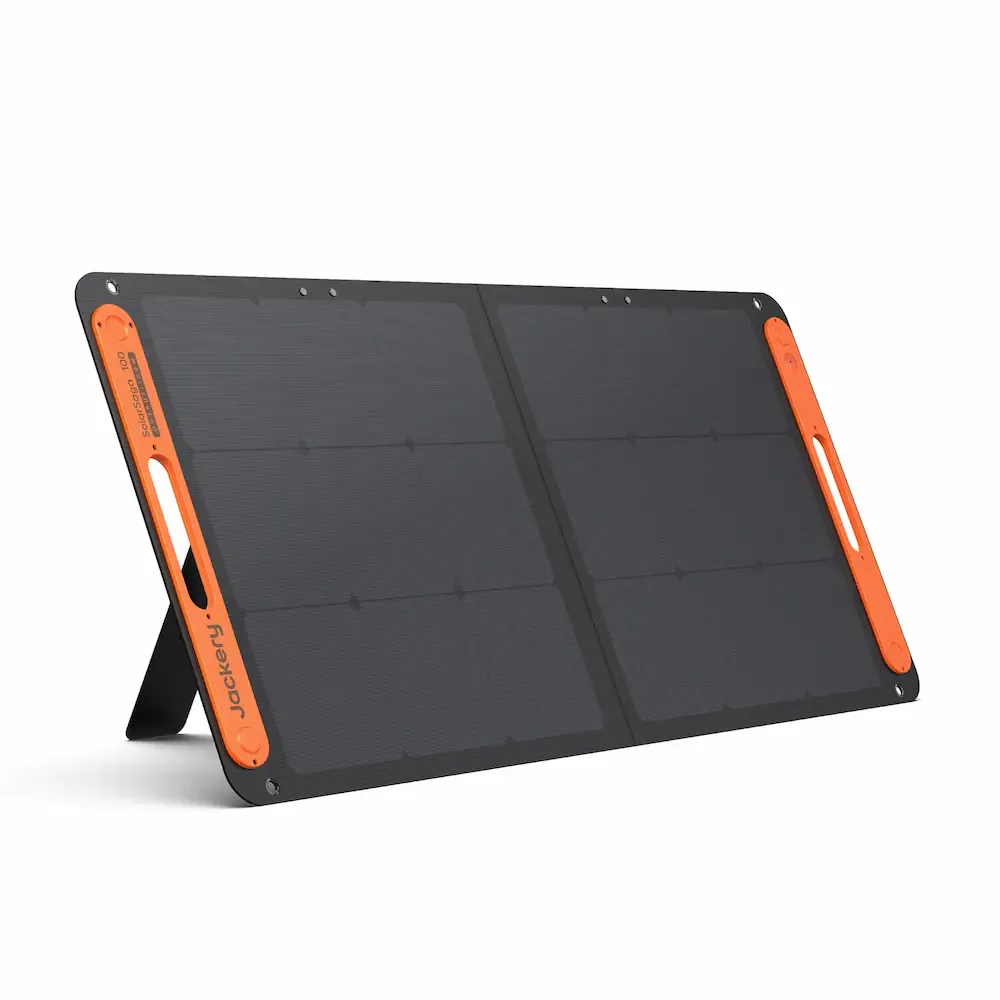
Jackery SolarSaga 100W Solar Panel
100W. Lightweight and portable. Covers the minimalist profile in any region and pairs naturally with the Jackery Explorer 1000 v2 via the proprietary DC8020 connector. For the weekend warrior profile in the Southwest, a single panel falls short of the 210W target. Two of these in parallel would cover it.
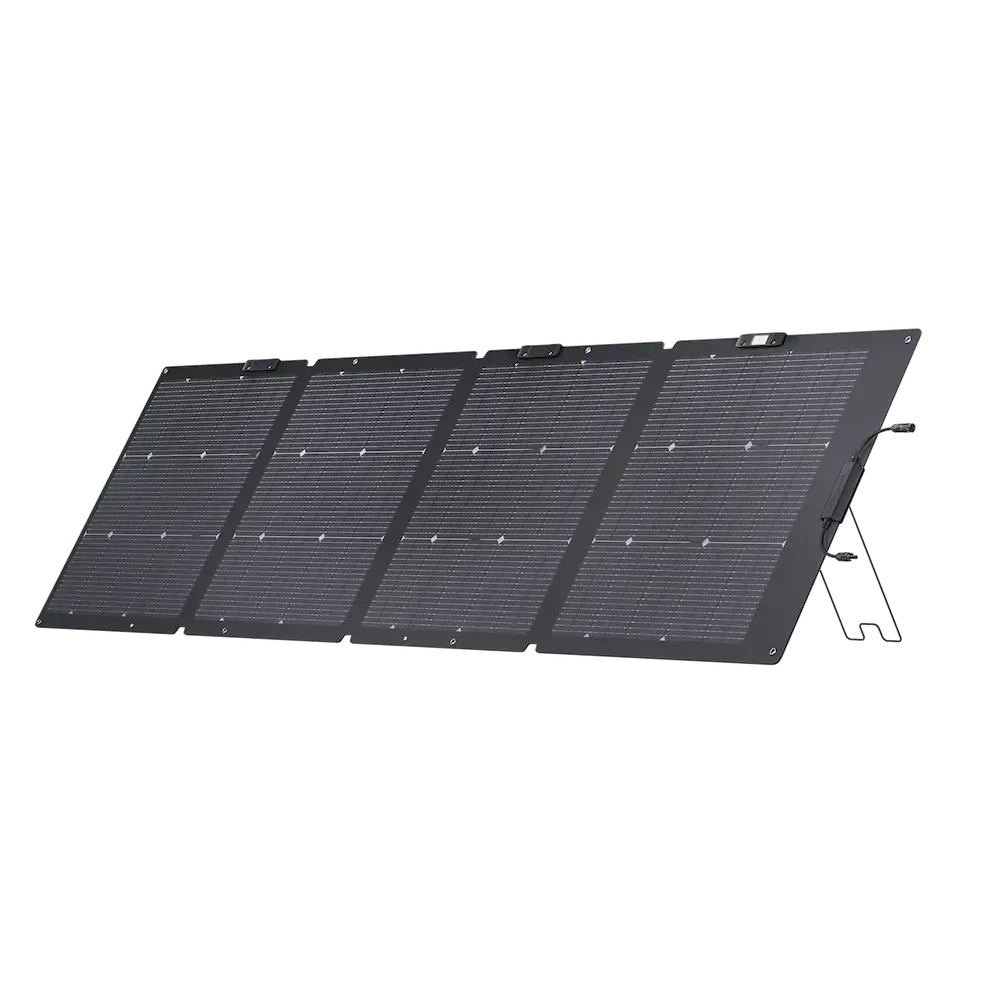
EcoFlow NextGen 220W Bifacial Portable Solar Panel
220W. One panel covers the weekend warrior profile in the Southwest (210W needed). The bifacial design captures reflected light from the ground, which helps in sandy desert environments. MC4 connectors make it compatible with most stations that accept third-party panels.
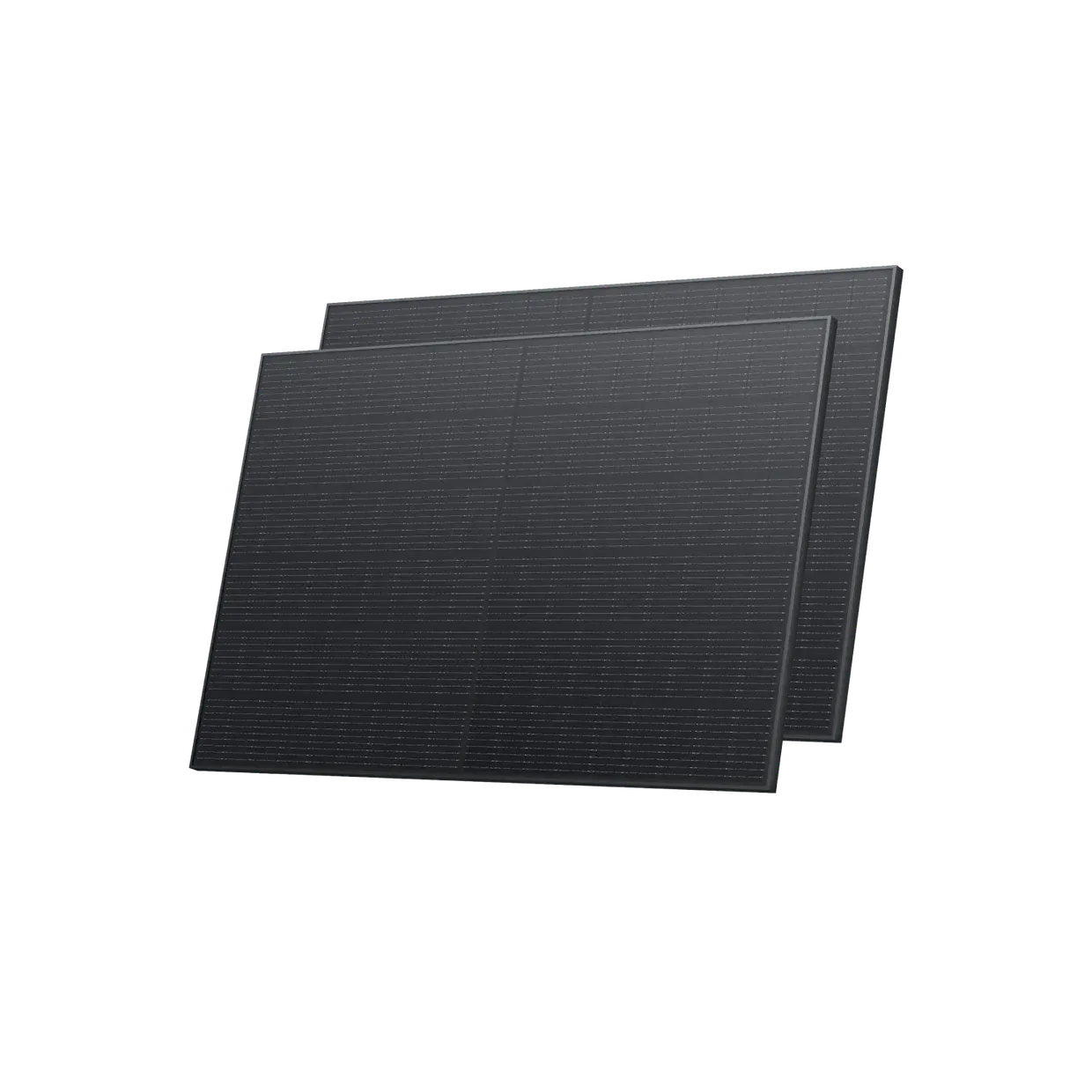
EcoFlow 400W Rigid Solar Panel
400W. Covers the full-timer profile in the Southwest (335W needed) with margin. At 21.8 kg (48 lbs) and a rigid form factor, this is a roof-mount panel, not a fold-and-carry. Best suited for RVs with permanent roof rail installations.
The RV AC Reality Check
Boondocking articles that promise rooftop AC on battery alone are misleading. The numbers do not support it for sustained operation.
A Dometic Brisk II (the most common 13,500 BTU RV rooftop unit) draws 1,788W running. Six hours of cooling consumes 10,728 Wh. That is more than two fully charged DELTA Pro 3 units (4,096 Wh each) with nothing left for any other device. And this assumes the station can handle the 8,856W startup surge in the first place, which most cannot without a soft-start module. See our RV rooftop AC guide for the full surge analysis and station tier breakdown.
Even the most solar-capable station cannot keep up. With 800W of panels in peak Arizona sun (effective harvest: 800 × 0.70 = 560W), the net battery drain is still 1,788 minus 560 = 1,228W. The battery depletes, just slower.
Seven-Day Boondocking Scenario
Theory is useful, but a day-by-day simulation reveals the real dynamics. Here is a Weekend Warrior setup (880 Wh/day) with the Jackery Explorer 1000 v2 (1,070 Wh) and a single 200W panel in Arizona (6 peak sun hours). Daily solar harvest: 200 × 0.70 × 6 = 840 Wh.
| Day | Solar Harvest | Daily Use | Net | Battery SOC |
|---|---|---|---|---|
| Day 1 (arrive 3 PM) | 280 Wh (2 peak hours) | 880 Wh | -600 Wh | ~44% |
| Day 2 | 840 Wh | 880 Wh | -40 Wh | ~40% |
| Day 3 | 840 Wh | 880 Wh | -40 Wh | ~36% |
| Day 4 (cloudy) | 420 Wh (half output) | 880 Wh | -460 Wh | Empty |
The pattern is clear: on full-sun days, the 200W panel nearly breaks even. The daily deficit is only 40 Wh, which the 1,070 Wh battery can absorb for a long time. But the arrival day costs 600 Wh before solar has a chance to work, and one cloudy day wipes out the reserve.
The station survives three clear days. One cloudy day depletes it. To extend reliability, either add a second panel (bringing harvest to 1,680 Wh/day, well above the 880 Wh need), switch to a larger station like the DELTA 2 Max (2,048 Wh) for a deeper reserve buffer, or reduce loads on cloudy days by shutting the cooler off during cool morning hours and limiting phone charging to once daily.
Frequently Asked Questions
How much solar do I need for boondocking?
It depends on your load profile and location. A weekend warrior in the Southwest needs about 210W of panels. The same profile in the Pacific Northwest in winter needs roughly 630W. Use the solar charge time calculator with your specific location for a precise estimate.
Can I boondock with just a power station, no solar?
For a weekend, yes. A 2,048 Wh station provides about 1,434 Wh usable (after 0.70 derate), covering roughly a day and a half of weekend warrior loads (880 Wh/day). Beyond that, you need solar, a generator, or a way to drive to a charging outlet.
What is the biggest power draw when camping?
RV rooftop AC is by far the largest at 1,450 to 1,788W running. For boondockers who avoid AC, the CPAP machine at 56W for 8 hours (448 Wh/night) and the portable cooler at 20W average (480 Wh/day) are the dominant loads.
Should I get a bigger battery or more solar?
If you camp in consistently sunny areas, invest in solar. It is the renewable resource that replenishes itself daily. If you camp in cloudy, shaded, or winter conditions, invest in battery capacity. A larger battery provides reserves when solar falls short.
Sources and Methodology
Device wattage data comes from OEM product pages and spec sheets verified in our database of 53 devices. The Dometic CFX3 35 at 50W running power is sourced from the Dometic product page. The 40% duty cycle is a standard engineering assumption for compressor coolers under typical ambient conditions, not an OEM-published spec. The ResMed AirSense 11 at 56W typical draw is sourced from ResMed clinical documentation. Solar harvest estimates use the industry-standard 0.70 real-world derate factor. Regional peak sun hours are sourced from the NREL National Solar Radiation Database.
For a complete explanation of our data sourcing and verification process, see our methodology page.
Related reading
Keep goingBest Portable Power Station for RV and Camping (2026)
For RV and camping, you need solar compatibility, USB-C for devices, and enough watts for a mini fridge or CPAP. Here are the top picks from our database.
Running an RV Rooftop AC on a Portable Power Station
RV rooftop ACs demand 1,450-1,788W running and up to 8,856W surge. Find out exactly which portable power stations can handle them, with and without a soft-start module.
Utility