
A portable power station can charge an electric vehicle. It will not charge it very much. This is an emergency strategy for getting a stranded EV to the nearest public charger, not a replacement for wall or Level 2 charging.
Here is the math. A standard Level 1 EVSE (the charging cable that comes with most EVs) draws 1,440W continuously when plugged into a 120V outlet. That number comes from the NEC 80% continuous load rule: a standard 15-amp household circuit can safely deliver 12 amps continuously (80% of 15A), and 12A multiplied by 120V equals 1,440W.
At 1,440W, a Level 1 EVSE typically delivers 2 to 5 miles of range per hour of charging. That is the real-world rate most EV manufacturers quote for 120V charging, and it already reflects onboard charger conversion losses and typical driving efficiency. The wide range reflects differences between vehicles: a Tesla Model 3 (roughly 3.9 miles per kWh EPA) lands near the top of that range, while a larger EV like a Ford F-150 Lightning or Rivian R1S (closer to 2.0 to 2.5 miles per kWh) lands near the bottom.
The largest portable power stations in our database hold approximately 4,000 Wh. After accounting for inverter losses (our standard 0.70 derate factor), that delivers about 2 hours of Level 1 charging, which translates to 4 to 10 miles of range depending on the vehicle. That is not a road trip. But it might be the difference between being stranded and reaching a DC fast charger five miles down the road.
The Power Math
Every Level 1 EVSE draws essentially the same wattage. Whether it is a Tesla Mobile Connector set to 12 amps, a Ford Charge Station Pro in Level 1 mode, or a third-party Lectron charger, the physics are identical: 12A at 120V equals 1,440W. Brand does not matter. The EVSE communicates with the vehicle’s onboard charger via the J1772 (or NACS) control pilot signal, and both sides agree on a 12-amp draw. There is no surge at startup because an EVSE is a pass-through electronic load, not a motor. The vehicle’s onboard charger ramps up smoothly.
15A circuit × 0.80 (NEC continuous load rule) = 12A
12A × 120V = 1,440W
This is the maximum continuous draw on a standard household circuit. All Level 1 EVSEs negotiate this rate via the pilot signal.
This means any power station with at least 1,440W of continuous AC output and a pure sine wave inverter can charge an EV. Here is the runtime and estimated range for four stations from our database:
Anker SOLIX C1000 (1,056 Wh)
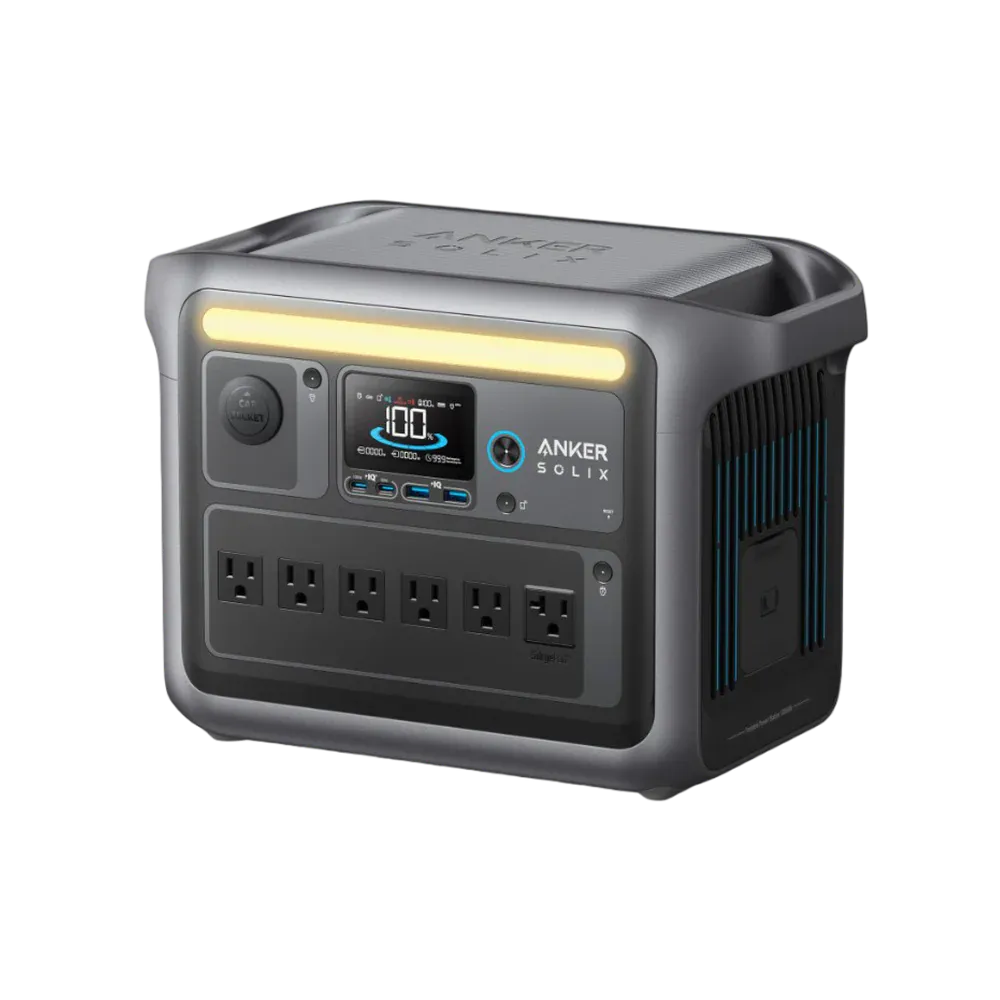
1,056 Wh × 0.70 / 1,440W = 0.5 hours
Estimated range: 1 to 2.5 miles
The C1000 is the smallest station in this roundup that can sustain 1,440W (its inverter is rated at 1,800W continuous). Half an hour of Level 1 charging is minimal, but it could be enough to reach a charger that is a mile or two away.
Bluetti AC200L (2,048 Wh)
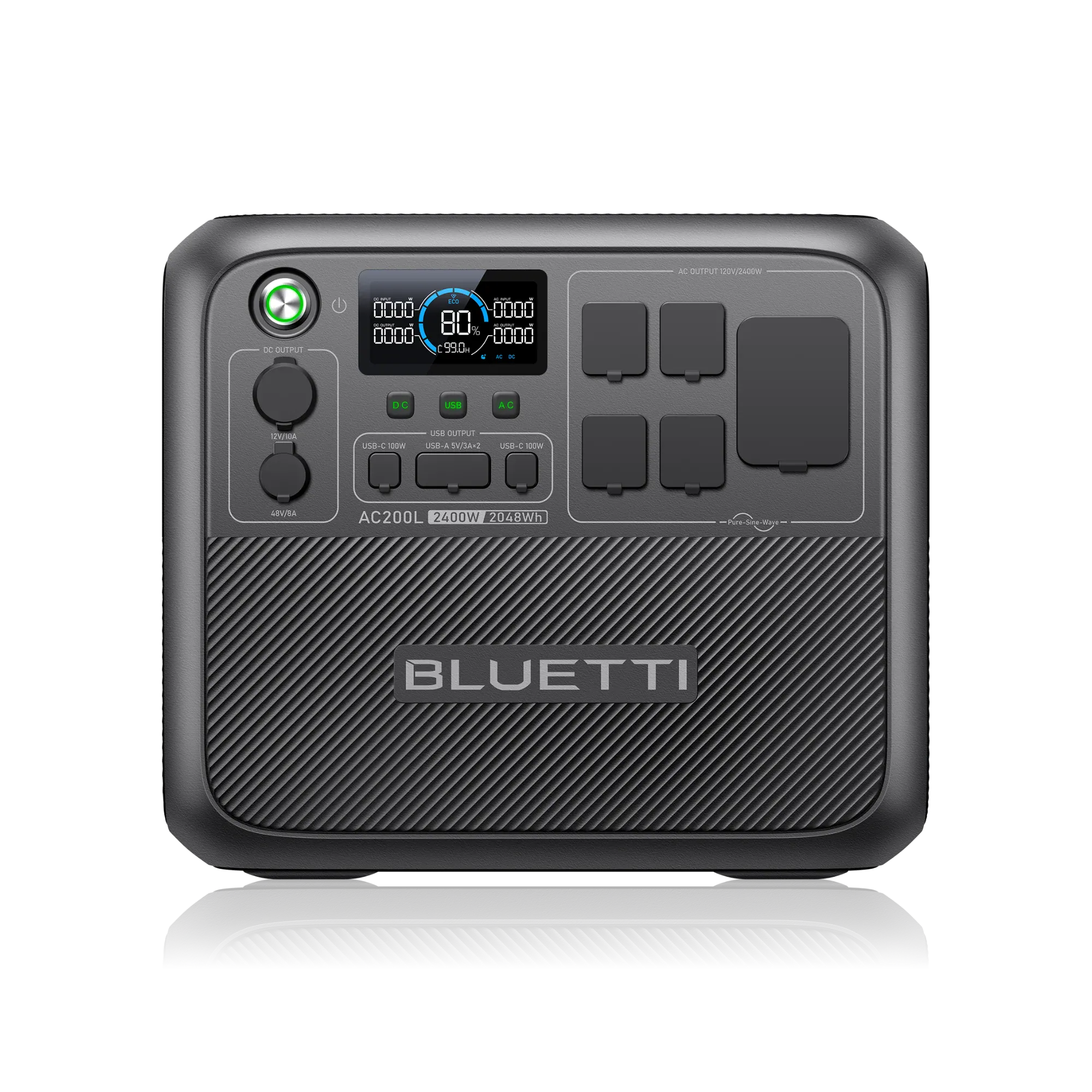
2,048 Wh × 0.70 / 1,440W = 1.0 hour
Estimated range: 2 to 5 miles
The AC200L doubles the usable capacity compared to the C1000. One hour of Level 1 charging is enough for a meaningful emergency top-up. The 2,400W continuous inverter handles the 1,440W EVSE draw with plenty of headroom.
Anker SOLIX F3800 (3,840 Wh)
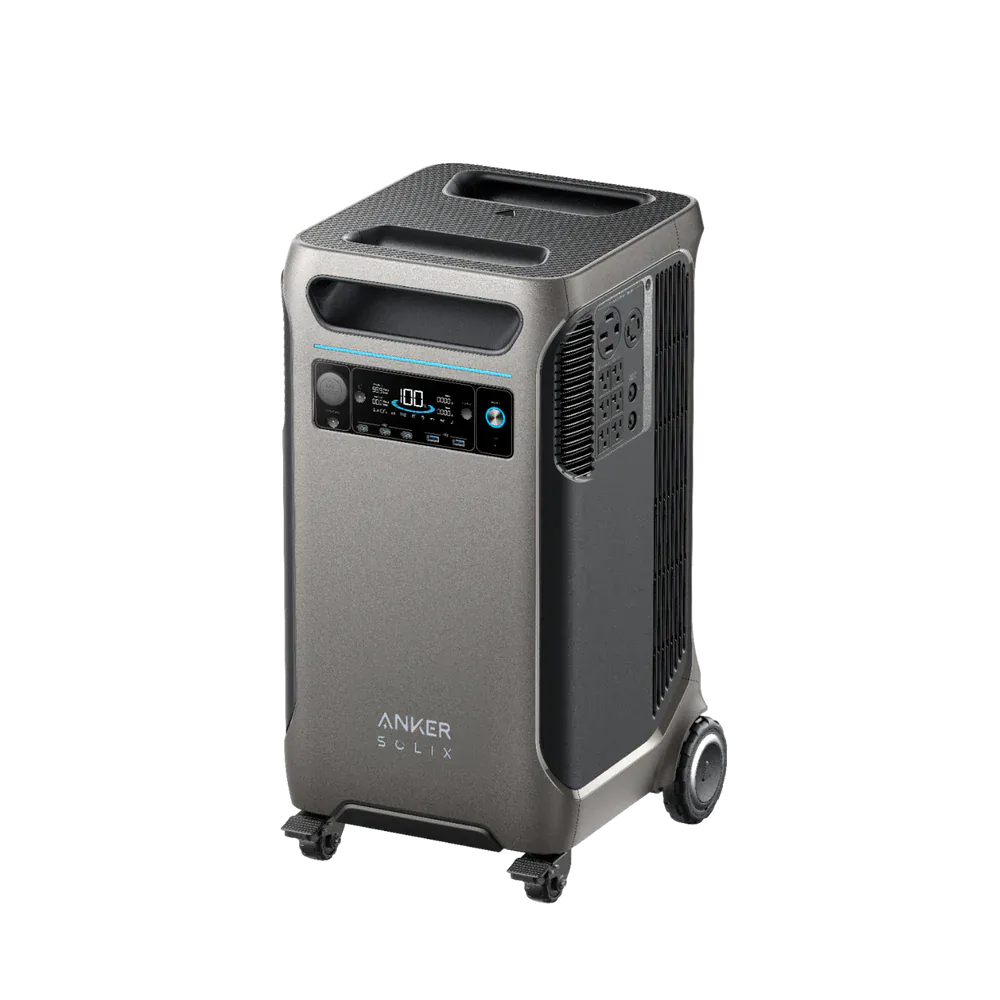
3,840 Wh × 0.70 / 1,440W = 1.9 hours
Estimated range: 3.8 to 9.5 miles
The F3800 is a serious home backup unit (6,000W continuous, 9,000W surge) that happens to be an excellent emergency EV charger. Nearly two hours of Level 1 charging puts you within reach of most suburban public chargers.
EcoFlow DELTA Pro 3 (4,096 Wh)
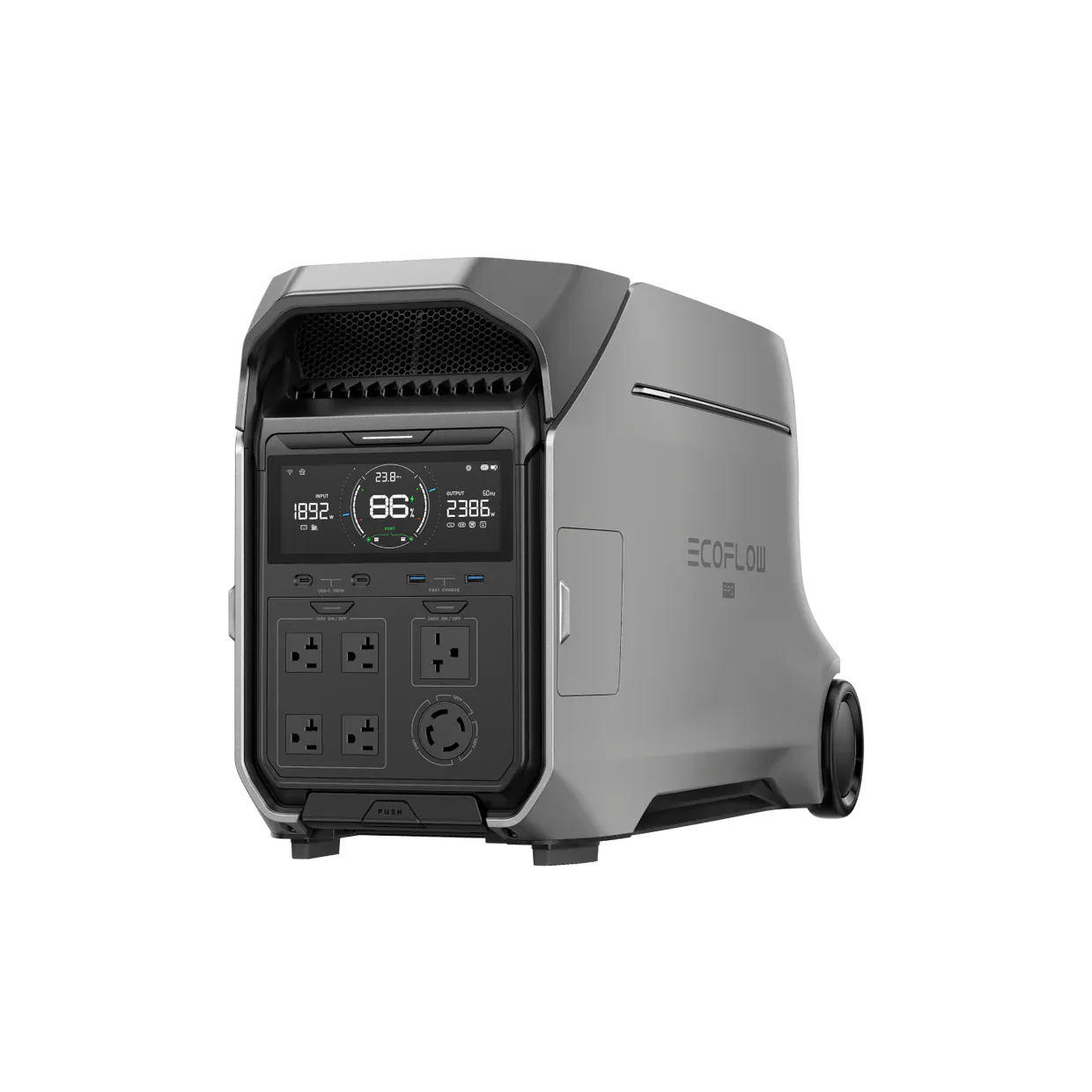
4,096 Wh × 0.70 / 1,440W = 2.0 hours
Estimated range: 4 to 10 miles
The DELTA Pro 3 delivers the most Level 1 charging time in our database. Two hours at 1,440W is enough to add 4 to 10 miles depending on the vehicle, covering most “stranded to nearest charger” scenarios.
When This Actually Makes Sense
Emergency EV charging from a power station is worth considering in a narrow set of scenarios.
Stranded with a dead battery. You misjudged your remaining range, and the nearest charger is 5 to 8 miles away. A power station in the trunk gives you enough range to limp to a DC fast charger or a friend’s house with an outlet. This is the most common and most practical use case.
Natural disaster with grid down. The power is out, roads are clearing, and you need to evacuate. A pre-charged power station can add enough range to reach a functioning charging station outside the affected area. In hurricane and wildfire evacuation scenarios, even 5 miles of range can make a meaningful difference. For more on disaster preparedness with power stations, see our hurricane battery backup guide.
Rural areas with sparse infrastructure. If you live or travel in regions where the nearest public charger is 20 or 30 miles away, a power station provides a margin of safety. Combined with solar panels (covered below), it can provide a slow but indefinite trickle of charge in truly remote locations.
Where it does not make sense: daily commute charging, road trip supplementation, or any scenario where grid power or a Level 2 charger is available. The energy density of portable power stations is simply too low to compete with wall charging. A 4,096 Wh station weighing over 60 pounds delivers the same range as about 15 minutes of Level 2 charging from a wall outlet. For routine use, install a Level 2 EVSE at home.
Solar Recharging for Extended Range
Solar panels can recharge the power station during daylight hours, creating a slow but renewable charging cycle. Here is what that looks like in practice.
The EcoFlow DELTA Pro 3 accepts up to 2,600W of solar input across its two PV ports (1,600W high-voltage at 30-150V/15A, plus 1,000W low-voltage). With a 1,600W panel array on the high-voltage port and our 0.70 real-world derate, expect approximately 1,120W of effective charging power. That recharges the 4,096 Wh battery in roughly 3.7 hours of strong sun.
4,096 Wh / (1,600W × 0.70) = 3.7 hours
Using the high-voltage port only (1,600W max).
The theoretical solar-to-EV cycle: 3.7 hours of solar charging fills the station, then 2 hours of EV charging delivers 4 to 10 miles, then you repeat. Over a full day of good sun (5 to 6 usable hours), you might complete one full cycle plus a partial second one, yielding 6 to 15 miles of total range.
The Anker SOLIX F3800, with two 1,200W solar ports (XT60), follows a similar pattern: approximately 4.6 hours to recharge from solar (3,840 / (1,200 × 0.70) = 4.6 hours), then 1.9 hours of EV charging for 3.8 to 9.5 miles.
The realistic caveat: this cycle depends on sustained, clear-sky sunlight. Cloud cover reduces panel output to 30 to 50% of rated power, which can double or triple the solar recharge time. In winter or at northern latitudes, shorter days and lower sun angles further reduce output. Solar-to-EV charging is a viable emergency strategy in summer across the southern and central US, but it becomes marginal in winter or overcast conditions.
For charge time estimates specific to your panel and station combination, use our solar charge time calculator. For guidance on panel wiring, see our series vs. parallel solar panel guide.
Level 2 (240V): Possible but Rare
Level 2 EVSE charges at 240V and dramatically higher wattage, typically 3,840W to 7,680W (16A to 32A at 240V). This is far more practical for adding real range: a 32A Level 2 charger delivers 20 to 30 miles per hour of charging.
The problem is that very few portable power stations can output 240V. In our database, only five models support 240V output: the EcoFlow DELTA Pro 3, the EcoFlow DELTA Pro Ultra, the EcoFlow DELTA Pro Ultra X, the Anker SOLIX F3800, and the Zendure SuperBase V4600. Of these, only the largest (the DELTA Pro Ultra, DELTA Pro Ultra X, and F3800) have the output wattage to sustain a Level 2 EVSE at meaningful amperage.
Even the stations that do support 240V face a fundamental energy limitation. The EcoFlow DELTA Pro 3 at 240V/20A delivers 4,800W, but its 4,096 Wh battery (derated to approximately 2,867 Wh usable) would be depleted in about 36 minutes. At a Level 2 rate, that 36 minutes might add 10 to 15 miles of range. Better than Level 1 for the same battery, but still modest.
Level 2 charging from a portable power station is technically possible with the right equipment but remains a niche application. The stations that support it are large, heavy, and expensive. For most EV owners, Level 1 charging from a power station is the more realistic emergency strategy because it works with a wider range of stations and does not require 240V-capable equipment. For a deeper look at 120V vs. 240V output across all stations, see our voltage guide.
Practical Tips for Emergency EV Charging
Keep the EVSE in the car. Most EVs ship with a Level 1 EVSE cable. Leave it in the trunk permanently. It weighs 5 to 8 pounds and takes up minimal space. Without this cable, the power station is useless for EV charging.
Know your EVSE amperage. Most Level 1 EVSEs default to 12A (1,440W) on a standard 15A circuit. Some adjustable EVSEs (like the Tesla Mobile Connector) allow you to reduce the amperage to 8A or even 5A. Lowering to 8A reduces the draw to 960W, which lets smaller stations (like a 1,000W-rated unit) handle the load. You get fewer miles per hour (roughly 1.5 to 3), but the station does not shut down from overload.
Charge only enough to reach help. Do not try to “fill up” the EV from a power station. Calculate the distance to the nearest charger, add a 20% safety margin, and charge only that amount. Every extra minute of charging beyond what you need is wasted time you could spend driving.
Park on level ground. EV range estimates assume flat terrain. If you need 5 miles to reach a charger but the route is uphill, your actual consumption will be higher. Factor terrain into your planning.
Monitor station output. Watch the power station’s display during EV charging. The draw should be steady at 1,400 to 1,450W with no fluctuations. If the station shows intermittent output, the EVSE may not be communicating properly. Try cycling the station off and on, then reconnecting the EVSE.
Avoid extension cords. If you must use one, use a short, heavy-duty cord rated 12 AWG or 10 AWG. Thin or long extension cords waste power as heat and cause voltage drop that can make charging unstable or prevent the EVSE from starting altogether.
If charging will not start. Some EVSEs are sensitive to inverter output quality and grounding. If charging will not initiate or repeatedly stops, try reducing the charging current to 8A (if your EVSE is adjustable), power-cycling the station, or using a different EVSE. Check your station’s manual for any generator or inverter compatibility notes.
Expect charging to stop early. EV chargers are more sensitive to voltage quality than most appliances. When the station drops to 5 to 10% remaining capacity, the inverter’s output voltage can sag slightly below the EVSE’s minimum threshold (typically around 104V). The EV may display a “voltage too low” error and stop charging even though the station still shows remaining battery. Plan for this: treat the last 10% of station capacity as unusable for EV charging.
Quick Reference Table
| Station | Capacity | Usable (× 0.70) | Level 1 Runtime | Range Added |
|---|---|---|---|---|
| Anker SOLIX C1000 | 1,056 Wh | 739 Wh | 0.5 hours | 1-2.5 miles |
| Bluetti AC200L | 2,048 Wh | 1,434 Wh | 1.0 hour | 2-5 miles |
| Anker SOLIX F3800 | 3,840 Wh | 2,688 Wh | 1.9 hours | 3.8-9.5 miles |
| EcoFlow DELTA Pro 3 | 4,096 Wh | 2,867 Wh | 2.0 hours | 4-10 miles |
These four stations are representative examples from our database. Any station with 1,440W+ continuous output and a pure sine wave inverter can charge a Level 1 EVSE. Range estimates use the Level 1 charging rate of 2 to 5 miles per hour (runtime × mi/hr), which is the industry-standard figure that already accounts for onboard charger losses and vehicle efficiency. Most sedans and crossovers land near the top of that range in mild weather; trucks and full-size SUVs near the bottom. The 0.70 factor estimates usable AC energy after inverter losses. Cold weather (below 40 degrees F) can reduce both power station output and EV charging efficiency by an additional 20 to 30%.
The Bottom Line
Charging an EV from a portable power station is slow and delivers modest range. It is not a substitute for grid charging or a Level 2 home EVSE. But for the specific scenario of “I need 5 to 10 miles to reach safety or a real charger,” a 2,000+ Wh power station in the trunk is genuine insurance. Pair it with a Level 1 EVSE cable (most EVs include one), and you have an emergency backup that requires no special adapters or installation.
For specific station and EV compatibility checks, use our compatibility checker. For sizing guidance across all device types, see our how to size a power station guide.
Related reading
Keep going120V vs 240V: Which Power Stations Support Split-Phase and Why It Matters
Only 5 of 33 portable power stations output 240V. Learn how US split-phase power works, which devices need it, and what your real options are.
Portable Power Station vs Gas Generator: Which Do You Actually Need?
Battery power stations are silent and indoor-safe. Gas generators deliver more watts per dollar. Here's the honest comparison with data from our database of 33 stations.
Utility