
The Camping Power Question
You are planning a three-day camping trip. You could bring a portable compressor cooler and run it from a mid-size power station. Or you could wedge a dorm mini-fridge into the truck bed and plug it into the same station. Both keep food cold. Both draw from the same finite battery. The difference is how fast they drain it.
The answer is not close. A portable cooler draws 3.5 to 4 times less energy per hour than a full-size refrigerator. Over a multi-day trip, that gap compounds into the difference between a station that lasts the whole weekend and one that dies overnight.
This article compares the two categories side by side using OEM-verified wattage data from our database. Run any specific pairing through our compatibility calculator to see your exact verdict.
How Compressor Coolers Work
Portable electric coolers (Dometic, BougeRV, Alpicool) use the same fundamental technology as your kitchen refrigerator: a compressor, a condenser, and a refrigerant loop. The compressor is just much smaller, and the insulated box is measured in liters rather than cubic feet.
Two features make them dramatically more efficient for portable use.
First, they accept both 12V/24V DC input and 120V AC. Running on DC input connects the compressor directly to the battery through the station’s DC output port, bypassing the inverter entirely. That eliminates the 10 to 15% conversion loss that occurs when the station converts DC battery power to AC and then the cooler’s adapter converts it back to DC. For camping, always use the 12V cigarette lighter output if your station has one.
Second, the compressor cycles on and off to maintain temperature. This is called duty cycle. At a typical 40% duty cycle, the compressor runs for roughly 24 minutes out of every hour. The rated power (50W for a Dometic CFX3 35) only applies while the compressor is running. The average draw over time is 50 × 0.40 = 20W. That 20W is what matters for runtime planning.
Temperature setting, ambient heat, how often you open the lid, and how much warm food you add all affect duty cycle. In hot conditions (95 degrees or above), duty cycle can climb to 60%. In mild conditions with a well-packed cooler, it can drop below 30%.
The Numbers Side by Side
We pulled three portable coolers and three french door refrigerators from our database. Running wattage is OEM-verified (coolers) or derived from ENERGY STAR annual kWh ratings (fridges). Surge values are engineering estimates at 2× running watts; actual startup surge varies by compressor age and ambient temperature.
| Spec | Dometic CFX3 35 | BougeRV CRPRO30 | Alpicool C20 | LG LMXS28596S | Samsung RF29DB9900 | GE Profile PGD29BYTFS |
|---|---|---|---|---|---|---|
| Type | Portable cooler | Portable cooler | Portable cooler | French door fridge | French door fridge | French door fridge |
| Running W | 50 | 45 | 60 | 207 | 200 | 195 |
| Surge W | 100 | 90 | 120 | 414 | 400 | 390 |
| Duty Cycle | 40% | 40% | 40% | 40% | 40% | 40% |
| Avg Draw | 20W | 18W | 24W | 83W | 80W | 78W |
| 12h Energy | 240 Wh | 216 Wh | 288 Wh | 996 Wh | 960 Wh | 936 Wh |
| 24h Energy | 480 Wh | 432 Wh | 576 Wh | 1,992 Wh | 1,920 Wh | 1,872 Wh |
The coolers average 18 to 24W. The fridges average 78 to 83W. That is a 3.5 to 4× difference in hourly draw. Over a full day, the gap widens to 432 to 576 Wh for coolers versus 1,872 to 1,992 Wh for refrigerators.
Surge is a non-issue for both categories on modern inverter-compressor models. Cooler surge (90 to 120W) is trivial for any station. Fridge surge (390 to 414W) is handled comfortably by any station above 500W. The challenge is not starting these devices; it is sustaining them. For a complete list of compatible stations, see our best stations for coolers and best stations for french door fridges pages.
Runtime on Popular Power Stations
Runtime from average draw
Runtime (hours) = (Capacity × 0.70) / Average watts
The 0.70 derate accounts for inverter efficiency, temperature, and battery age. Average watts already includes the 40% duty cycle.
| Station | Usable Wh (× 0.70) | Dometic CFX3 (20W) | Alpicool C20 (24W) | LG Fridge (83W) | Samsung Fridge (80W) |
|---|---|---|---|---|---|
| Jackery 300 Plus (288 Wh) | 202 | 10.1 hours | 8.4 hours | 2.4 hours | 2.5 hours |
| Anker SOLIX C1000 (1,056 Wh) | 739 | 37 hours | 31 hours | 8.9 hours | 9.2 hours |
| Jackery 1000 v2 (1,070 Wh) | 749 | 37 hours | 31 hours | 9.0 hours | 9.4 hours |
| EcoFlow DELTA 2 Max (2,048 Wh) | 1,434 | 72 hours | 60 hours | 17 hours | 18 hours |
| Bluetti AC200L (2,048 Wh) | 1,434 | 72 hours | 60 hours | 17 hours | 18 hours |
A 1,000 Wh station runs the Dometic cooler for 37 hours, more than three days of continuous cooling on a single charge. The same station runs a french door fridge for about 9 hours, not even a full overnight cycle during a power outage.
At 2,048 Wh, the DELTA 2 Max or AC200L extends cooler runtime to a full three days (72 hours) and fridge runtime to roughly 17 hours, enough to get through a short outage with some margin if you minimize door openings.
Runtime comparison
Jackery Explorer 1000 v2 (1,070 Wh) — 749 Wh usable (after 0.70 derate)
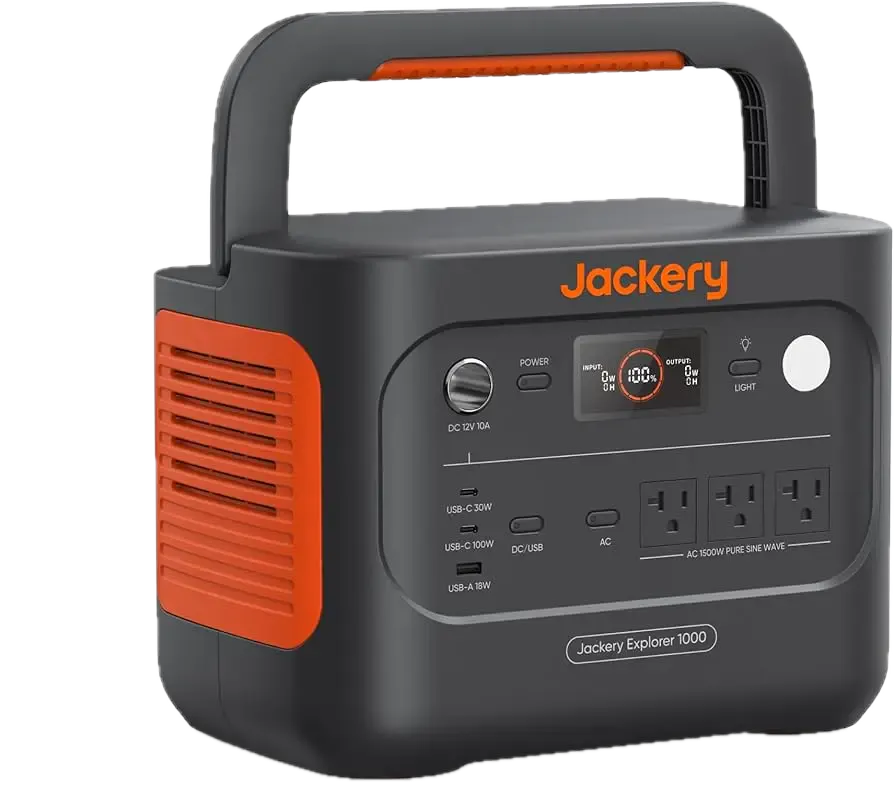
Jackery Explorer 1000 v2
1,070 Wh, 1,500W continuous. Runs the Dometic CFX3 for 37 hours on a single charge. Accepts up to 200W of solar input. Weighs 23.8 lbs. This is the natural pairing for a weekend camping cooler: enough capacity for the trip, light enough to carry, and solar-ready for longer stays.
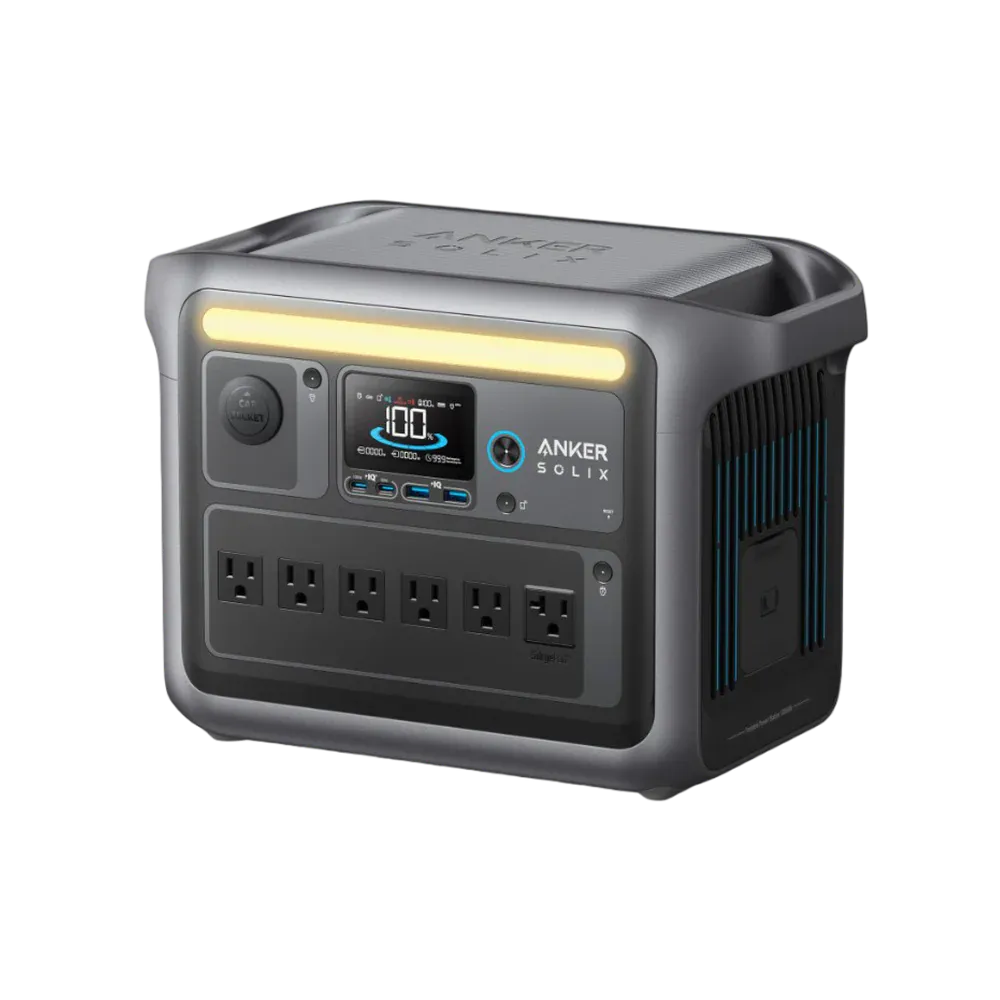
1,056 Wh, 1,800W continuous. Nearly identical runtime to the Jackery 1000 v2 for cooler use. Higher continuous output (1,800W vs 1,500W) if you need to run other devices simultaneously. Accepts up to 600W of solar input for faster recharging.
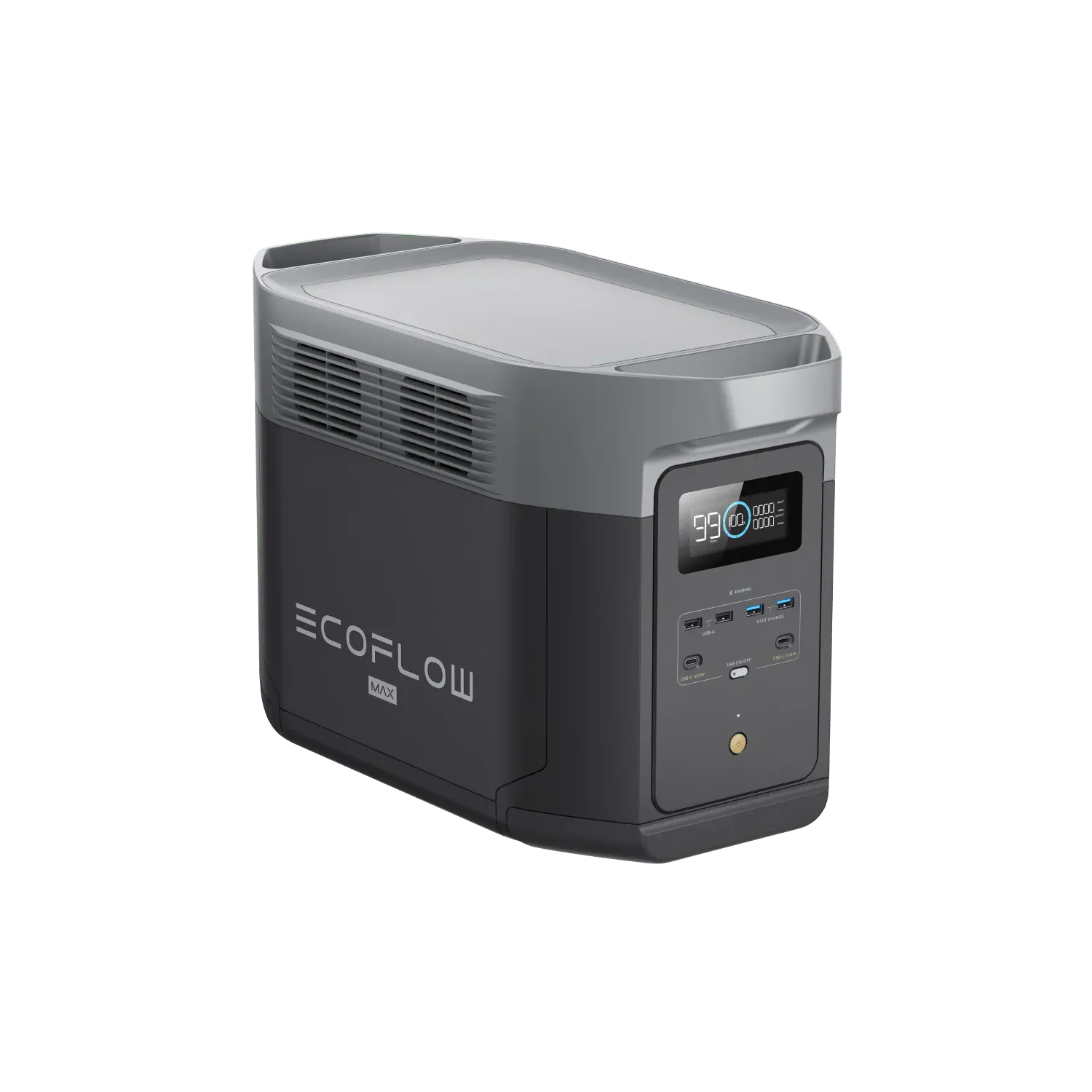
EcoFlow DELTA 2 Max
2,048 Wh, 2,400W continuous. The minimum practical capacity for running a full-size fridge through a short power outage. At 17 hours of runtime, it covers a daytime outage with margin. For outages exceeding 24 hours, pair with solar panels. See our running a fridge on battery guide for extended outage planning.
Solar Pairing
Solar changes the equation from “how long until the battery dies” to “can the panel keep up with the load.”
For coolers: A 100W panel produces about 350 Wh per day in decent sun (100 × 0.70 derate × 5 peak sun hours). The Dometic CFX3 uses 480 Wh per day. A single 100W panel covers 73% of the daily load, leaving a deficit of roughly 130 Wh per day. A 1,000 Wh station (700 Wh usable) buffers about 5 days of that deficit before depletion. For true indefinite operation, step up to a 200W panel (700 Wh/day harvest, comfortably exceeding the 480 Wh load). Use our solar charge time calculator to estimate harvest for your specific location.
For fridges: A 100W panel covers only 18% of the french door fridge’s 1,992 Wh daily draw. You need 400W or more of panels just to approach break-even during daylight, and the battery still drains overnight. Sustaining a full-size fridge through a multi-day outage requires serious solar investment and a large battery reserve.
For a deeper dive on panel selection, wiring, and compatibility, see our solar panel guide.
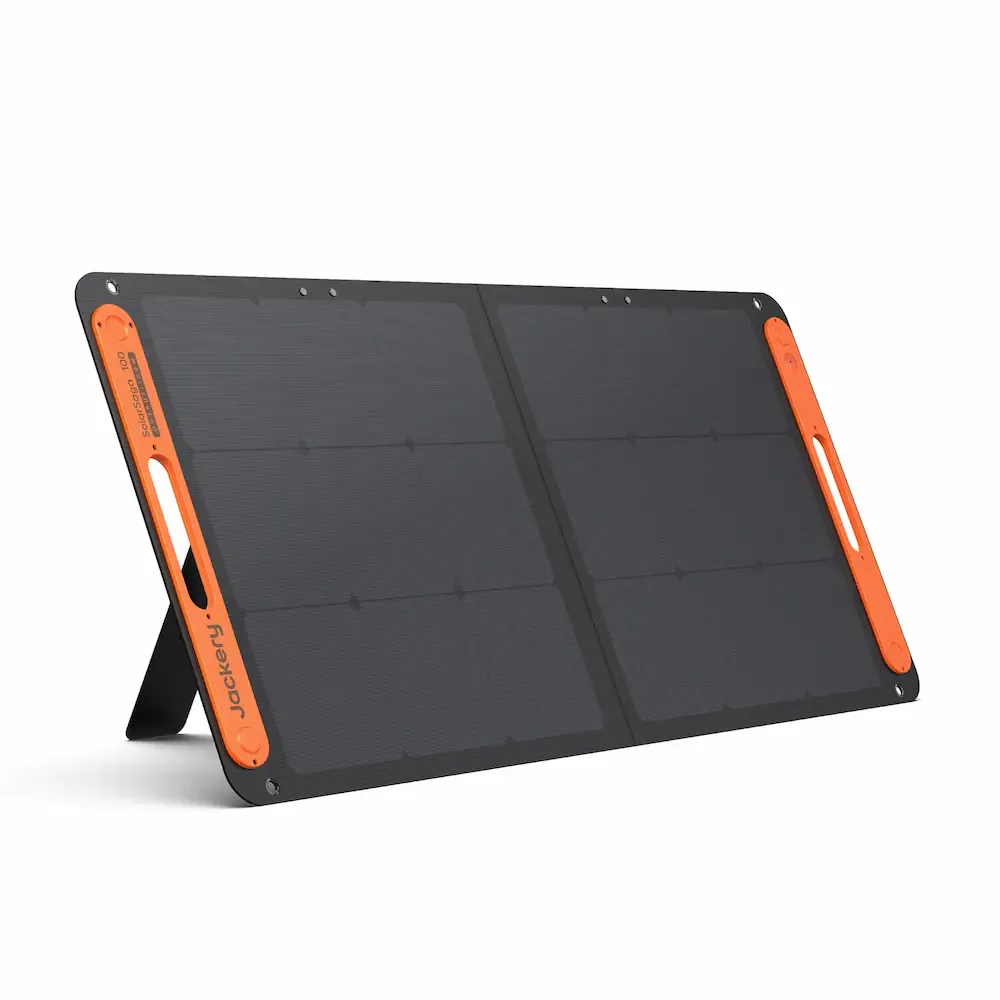
Jackery SolarSaga 100W Solar Panel
100W. Covers 73% of the Dometic CFX3’s daily draw. Pairs with the Jackery Explorer 1000 v2 via the proprietary DC8020 connector. Lightweight and foldable for camp use.
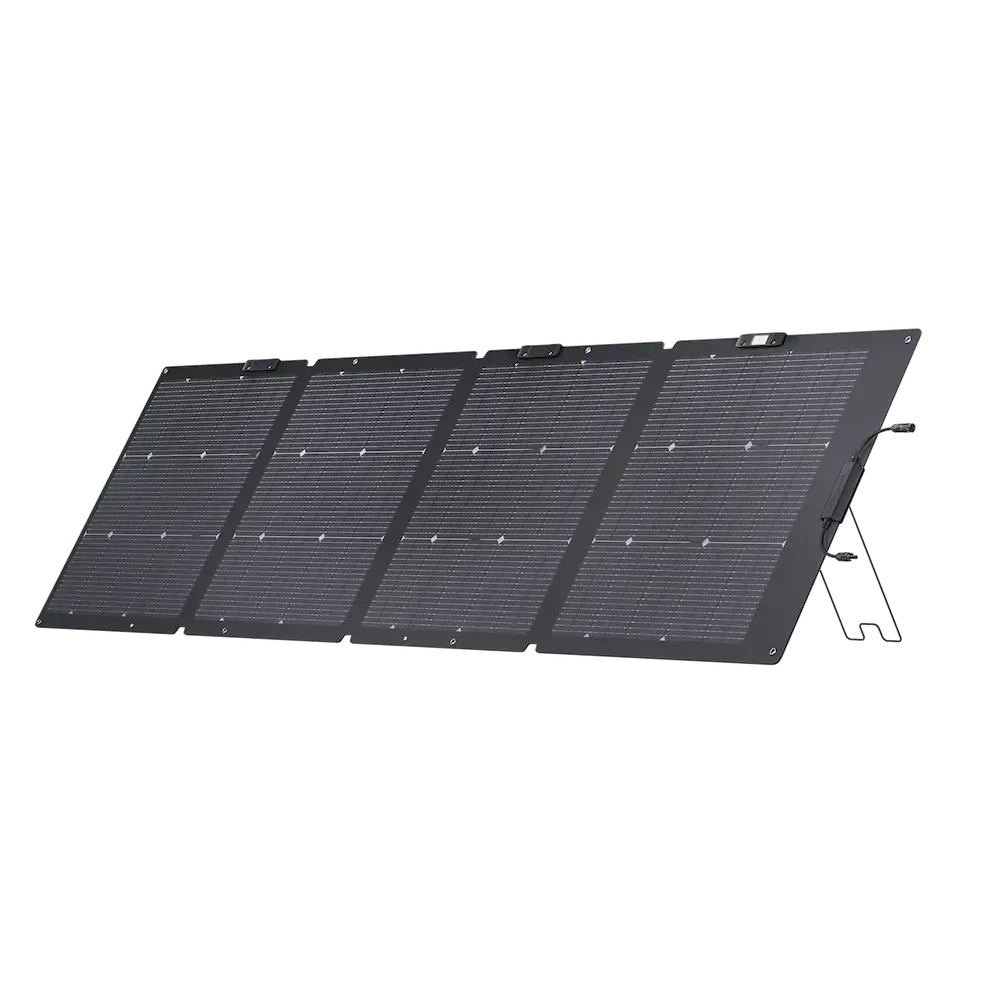
EcoFlow NextGen 220W Bifacial Portable Solar Panel
220W. Produces roughly 770 Wh per day (220 × 0.70 × 5), covering 39% of a french door fridge’s daily load. Two of these (440W total) approach break-even and extend a 2,048 Wh station through a multi-day outage.
When to Use Each
| Scenario | Best Choice | Why |
|---|---|---|
| Weekend camping trip | Portable cooler | 37+ hours on a 1,000 Wh station. No solar needed. |
| Week-long overlanding | Portable cooler + 200W panel | Solar covers 100%+ of daily load. Battery bridges overnight. |
| Home power outage (24h) | Full-size fridge | Keep your existing food cold. A 2,000 Wh station covers it. |
| Home power outage (72h) | Full-size fridge | Need 4,000+ Wh or 600W+ solar. See our fridge guide. |
| RV full-timer | Portable cooler | A fridge drains too fast on battery. Most boondockers use 12V coolers. See our boondocking guide. |
| Tailgating or day trip | Portable cooler | A 300 Wh station runs a cooler for 10+ hours. |
Frequently Asked Questions
How long will a portable cooler run on a Jackery 300 Plus?
The Dometic CFX3 35 at 20W average draw runs for about 10 hours on the Jackery 300 Plus (202 Wh usable). That is enough for a day trip but not overnight. For multi-day camping, step up to a 1,000 Wh station (37 hours of runtime) or pair the 300 Plus with a 100W solar panel to extend it. See our best stations for coolers page for the full ranked list.
Can I run my home fridge on a portable power station during a blackout?
Yes. A french door refrigerator averages 78 to 83W with duty cycling. A 2,048 Wh station (like the DELTA 2 Max or AC200L) runs it for about 17 hours. For a full 72-hour outage, pair the station with 400 to 600W of solar panels or consider an expandable station with additional battery modules. Our sizing guide covers battery capacity planning for extended outages.
Is a portable cooler more efficient than a mini-fridge?
Yes. Portable compressor coolers (Dometic, BougeRV, Alpicool) are specifically designed for low power draw at 12V or 24V DC. They average 18 to 24W versus 50 to 80W for a typical dorm mini-fridge. That efficiency advantage compounds over multi-day trips: 432 to 576 Wh per day for a cooler versus 1,200 to 1,920 Wh for a mini-fridge.
Should I use DC or AC to power my cooler from a power station?
DC (12V) is 10 to 15% more efficient because it bypasses the inverter. When you use the AC outlet, the station converts battery DC to 120V AC, and then the cooler’s adapter converts it back to DC for the compressor. That double conversion wastes energy. If your station has a 12V cigarette lighter output, use it. Your effective runtime increases by roughly 10%.
Sources and Methodology
Cooler wattage data is sourced from OEM product pages: Dometic CFX3 35 (50W rated, dometic.com), BougeRV CRPRO30 (45W max, bougerv.com), and Alpicool C20 (60W rated, alpicool.com). Refrigerator wattage is derived from ENERGY STAR annual kWh ratings: LG LMXS28596S (724 kWh/yr), Samsung RF29DB9900 (700 kWh/yr), and GE Profile PGD29BYTFS (681 kWh/yr), converted to running watts at 40% duty cycle. All runtime calculations use a 0.70 real-world derate factor.
For a complete explanation of our data sourcing and verification process, see our methodology page.
Related reading
Keep goingBoondocking Power Guide: Sizing Solar + Battery for Off-Grid RV
How much battery and solar do you actually need for boondocking? Real load profiles from coolers to CPAP machines, with station and panel recommendations from our database.
Best Portable Power Station for RV and Camping (2026)
For RV and camping, you need solar compatibility, USB-C for devices, and enough watts for a mini fridge or CPAP. Here are the top picks from our database.
Utility