
The Voltage Gate
Before watts. Before surge. Before runtime. There is a question that comes first: does the power station output the voltage your device requires?
Most portable power stations output 120V from a single inverter. Most household devices run on 120V. This works. But a subset of high-draw appliances in American homes requires 240V, and for these devices, voltage is a hard gate. It is not a question of battery capacity or inverter power. It is a question of physics. A 120V station cannot produce 240V any more than a garden hose can produce the pressure of a fire hydrant. The plumbing is different.
Our compatibility calculator checks voltage before anything else. If the station outputs 120V and the device requires 240V, the result is VOLTAGE_FAIL. No amount of wattage headroom changes the outcome. A Jackery Explorer 300 Plus paired with a central AC returns VOLTAGE_FAIL even though the question of watts never enters the conversation.
How US Residential Power Actually Works
Most articles about portable power stations skip this section. That is a mistake, because understanding how your home receives electricity is the only way to understand why most power stations cannot replicate it fully.
The utility delivers power to your home from a center-tapped transformer mounted on the pole or pad outside. This transformer produces two hot conductors (Line 1 and Line 2), each carrying 120V relative to a shared neutral. The two lines are 180 degrees out of phase with each other. This arrangement is called split-phase power, and it is the standard for virtually every residential service in the United States.
Split-phase voltage
Line 1 to Neutral = 120V | Line 2 to Neutral = 120V | Line 1 to Line 2 = 240V
A 120V circuit uses one hot leg and the neutral. This powers standard outlets throughout your house: the ones behind your TV, in the bedroom, in the garage. Every portable power station in our database can produce this.
A 240V circuit uses both hot legs. The voltage between Line 1 and Line 2 is 240V because the two 120V waveforms are 180 degrees apart, and their difference at any given instant sums to 240V. Some 240V circuits also include a neutral conductor. This is the case for electric dryers and ranges, which need 240V for the heating element but also need 120V (one hot to neutral) for the drum motor, controls, and timer.
Why a single 120V inverter cannot produce split-phase 120/240V. A standard portable power station contains one inverter that generates a single 120V AC waveform. To produce split-phase 240V, the station needs two synchronized 120V legs (L1 and L2) offset by exactly 180 degrees. This requires a dual-leg output stage — whether achieved through paired inverters, a split transformer, or another topology. Only the largest and most expensive stations include this architecture, which is why only five stations in our database (as of 2026) support 240V output.
The 240V Devices in Our Database
Four categories of devices in our database require 240V. Each is hard-wired or plugged into a dedicated 240V circuit in your home, and none will operate on a 120V power station.
Central Air Conditioner (3-Ton): 4,060W running, 21,356W surge, compressor load profile. The compressor motor requires 240V split-phase. This device demands both the highest voltage and the highest surge of anything in a typical home. Even the most powerful portable power station barely handles it, as detailed in Section 5.
Well Pump (1 HP): 2,392W running, 7,176W surge, motor load profile. Deep well pumps are standardized at 240V because the long wire run to the pump at the bottom of the well creates voltage drop. At 120V, the drop would be severe enough to prevent the motor from starting. At 240V, the same power is delivered at half the current, reducing losses.
Electric Water Heater (50 gallon): 5,500W running, 5,500W surge, heating element. Dual heating elements operating at 240V. This is a pure resistive load with no surge, but the sheer wattage (5,500W) demands 240V to stay within safe amperage limits for household wiring. At 120V, the same 5,500W would require nearly 46 amps, far exceeding any standard residential circuit.
Electric Clothes Dryer: 5,600W running, 5,600W surge, heating element. The dryer uses 240V for its heating element and 120V (from one leg to neutral) for the drum motor and electronic controls. This is the classic example of a device that needs true split-phase, not just stepped-up single-phase 240V.
For a complete sizing breakdown of these devices, see our full sizing guide.
NEMA Connector Guide
The shape of the outlet on a power station tells you the voltage and amperage it delivers. Here are the connectors relevant to portable power station use:
NEMA 5-15 (120V, 15A). The standard household outlet. Every power station has at least one. Handles up to 1,800W (15A × 120V).
NEMA 5-20 (120V, 20A). Found in kitchens, bathrooms, and garages. Rarely appears on power stations. Handles up to 2,400W.
TT-30 / L5-30 (120V, 30A). The RV outlet. A few stations include one. For stations without it, a “dogbone” adapter converts a standard 5-15 outlet to a TT-30, though at reduced amperage.
NEMA 14-30 (120/240V, 30A). The electric dryer outlet. Provides split-phase 240V with neutral. Found on very few stations: the Anker SOLIX F3800 and EcoFlow DELTA Pro 3 include one.
NEMA 14-50 (120/240V, 50A). The range and EV charger outlet. Provides split-phase 240V. Found only on the DELTA Pro Ultra X.
NEMA L14-30 (120/240V, 30A). The twist-lock outlet used by portable gas generators and for transfer switch connections. Found on the DELTA Pro Ultra and some transfer switch kits.
The 5 Power Stations That Output 240V
Before reaching for a $2,000+ station, consider whether you actually need 240V. The vast majority of devices people want to run during an outage — refrigerators, freezers, sump pumps, window ACs, portable ACs, medical equipment, electronics — are all 120V. Only central AC, well pumps, electric water heaters, and electric dryers require 240V. If none of those four are on your list, a standard 120V station is all you need. See our sizing guide to find the right one.
Of the 33 portable power stations in our database, only five produce 240V split-phase output. All five are large-format units priced above $2,000.
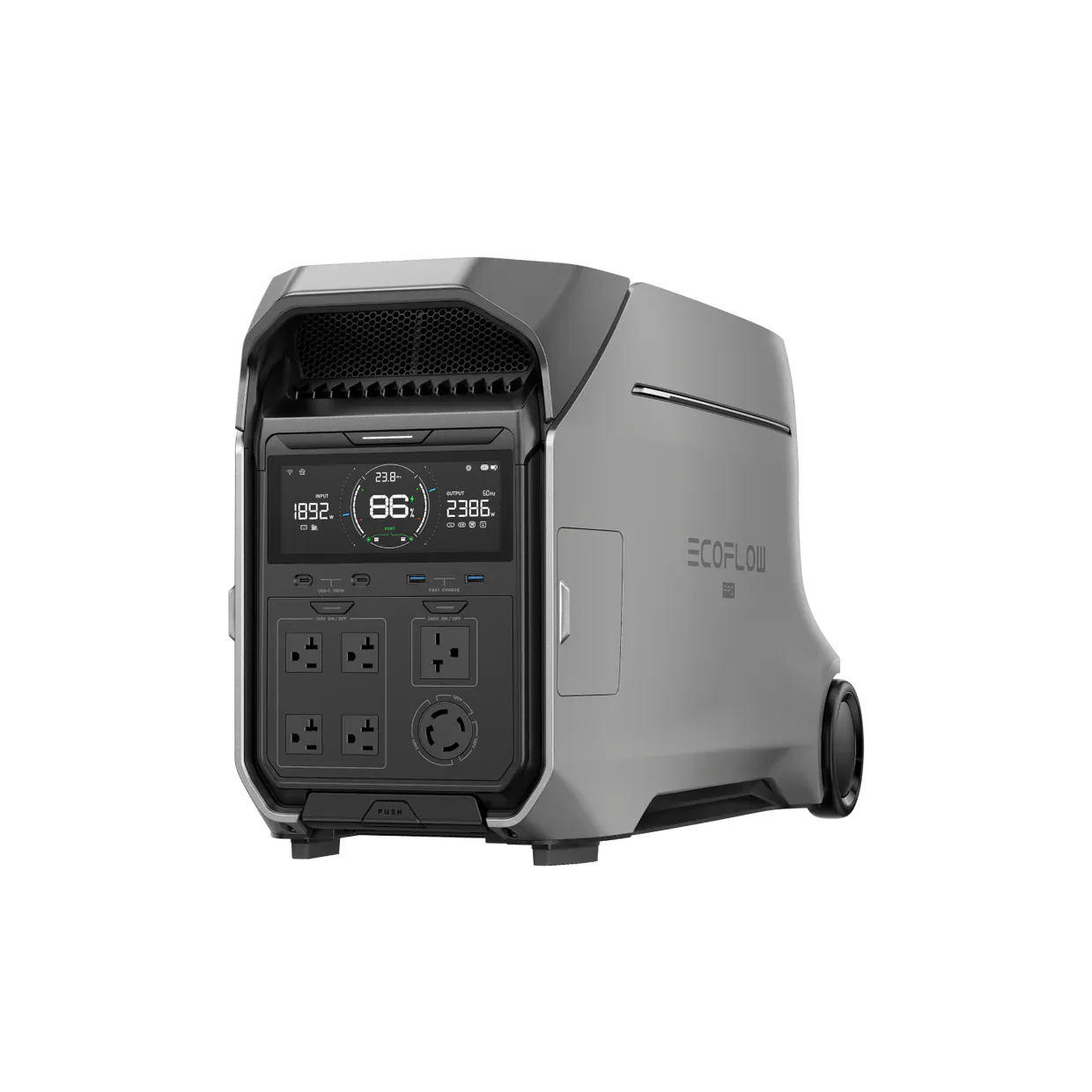
4,000W continuous, 8,000W surge, 4,096 Wh, 120V/240V. The DELTA Pro 3 is the most affordable entry point for 240V output. Its 8,000W surge handles the well pump (7,176W surge) with margin. It can run the electric water heater (5,500W) only if no other large loads are active simultaneously, since its 4,000W continuous output at 240V may be split across two legs (2,000W per leg in some configurations). It cannot run a central AC (21,356W surge far exceeds 8,000W peak). It cannot run a dryer at full power (5,600W exceeds 4,000W continuous).
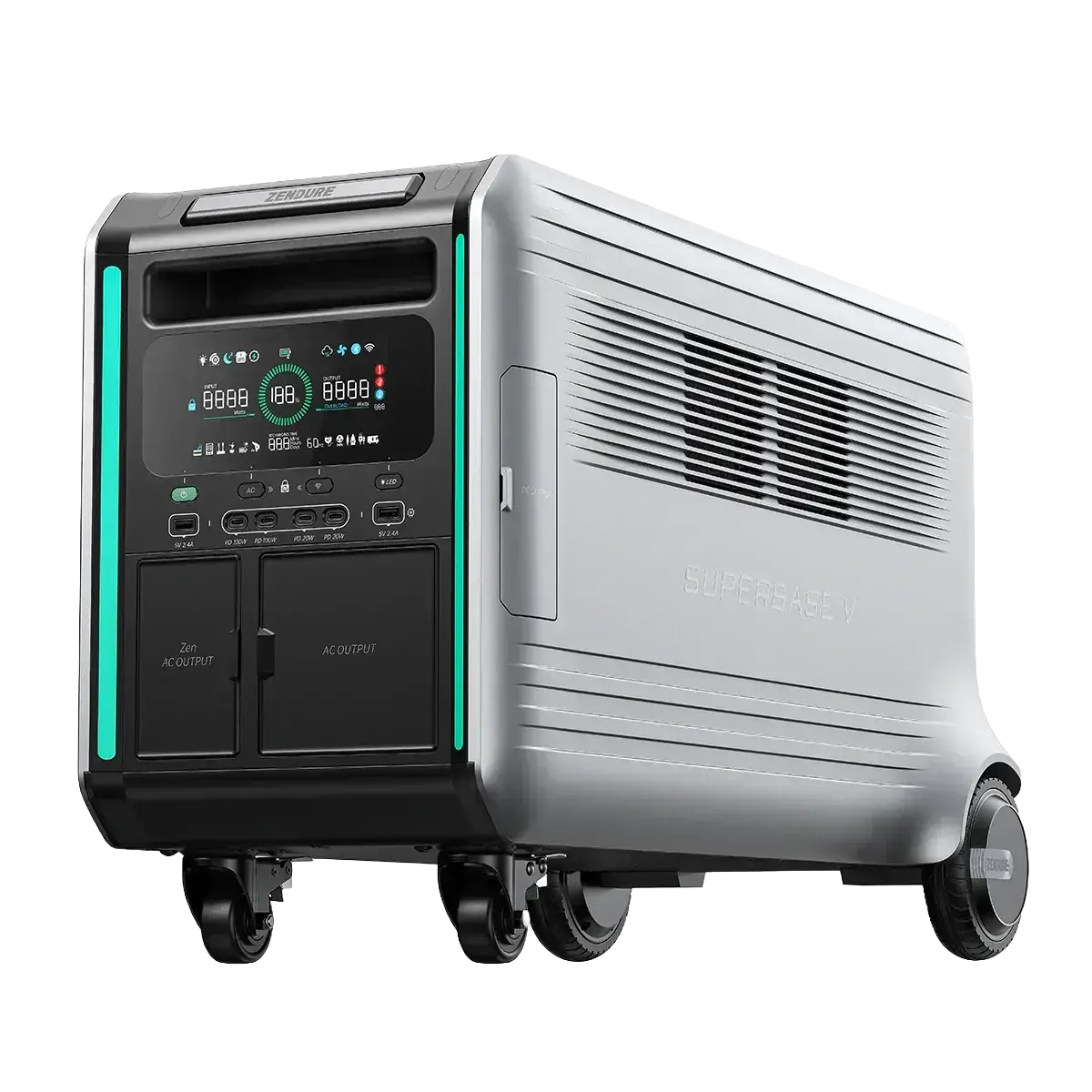
3,800W continuous, 3,800W surge, 4,608 Wh, 120V/240V, expandable to 23,040 Wh. The V4600 has the largest single-unit battery in our database but a critical limitation: its 1:1 surge ratio means it has zero surge headroom. It can only power 240V resistive loads (like a water heater) under 3,800W. Any 240V motor or compressor load that surges above 3,800W will trip the inverter immediately. The well pump at 7,176W surge is a hard fail.
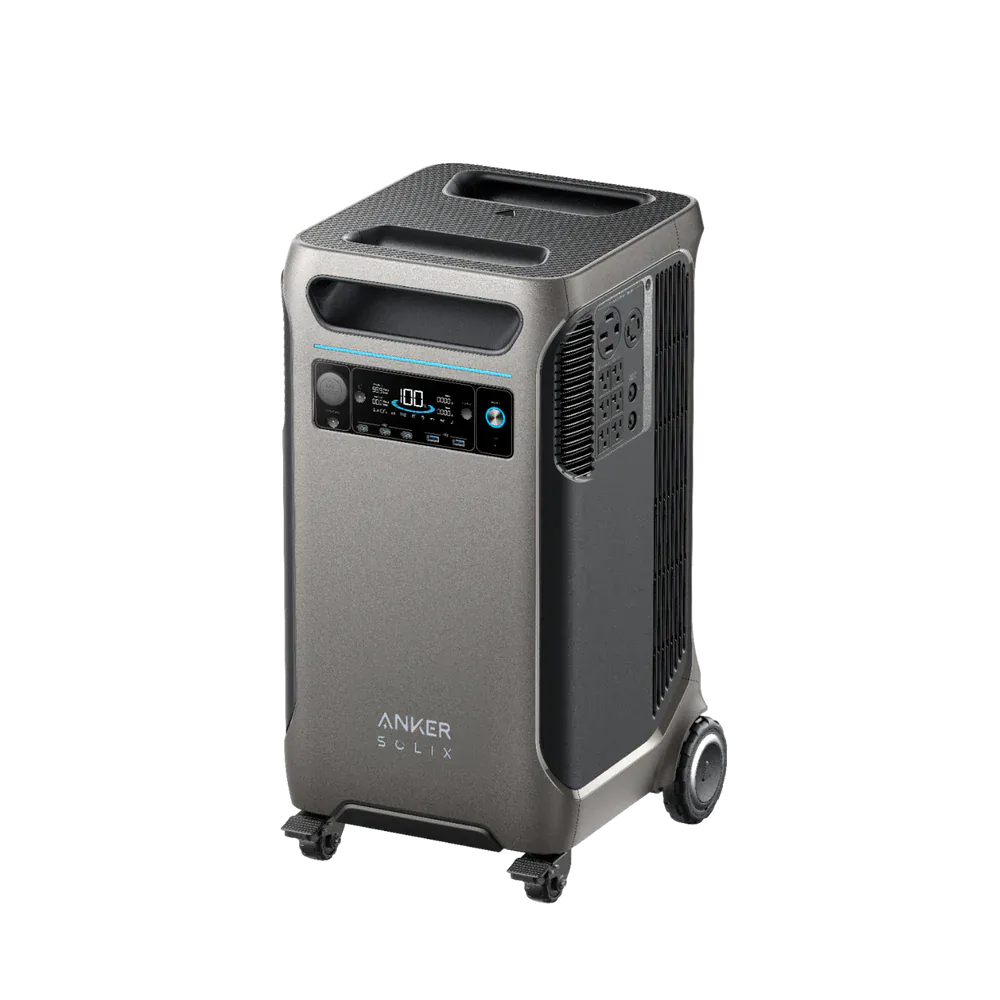
6,000W continuous, 9,000W surge, 3,840 Wh, 120V/240V. The F3800 is the most versatile 240V station. Its 9,000W surge handles the well pump (7,176W) comfortably. It can run a clothes dryer (5,600W) and a water heater (5,500W) within its 6,000W continuous rating. It cannot run a central AC (21,356W surge). For most 240V needs short of central HVAC, this is the practical choice. See our best stations for well pump for detailed compatibility results.
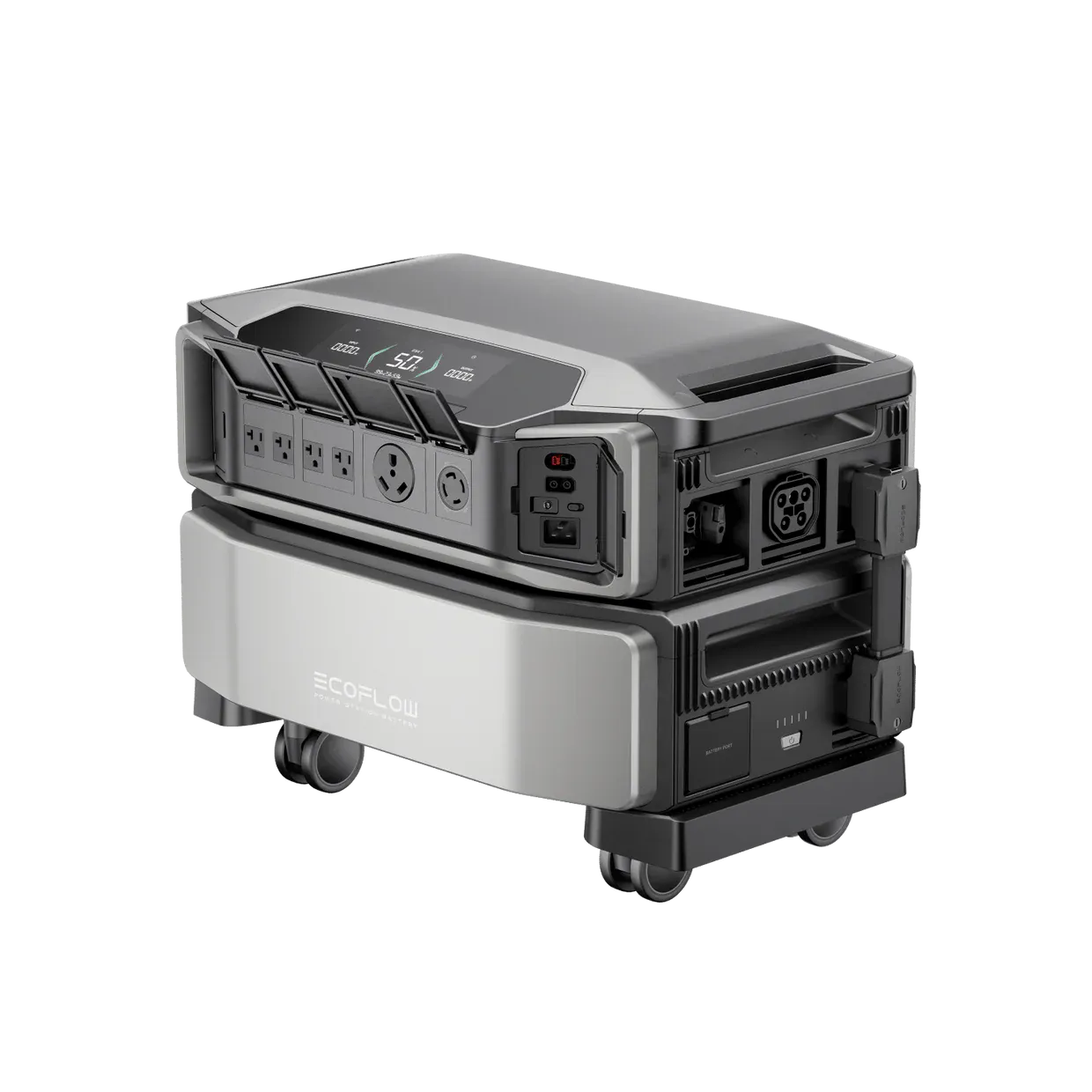
6,000W continuous, 12,000W surge, 6,144 Wh, 120V/240V. The DELTA Pro Ultra matches the F3800 on continuous output but offers 33% more surge capacity and significantly more battery storage. It handles the well pump, dryer, and water heater. Its 12,000W surge still falls far short of the central AC’s 21,356W demand. Multiple inverters can be paralleled with the Smart Home Panel 2 to reach up to 21.6kW output, but that is a permanent installation, not a portable solution.
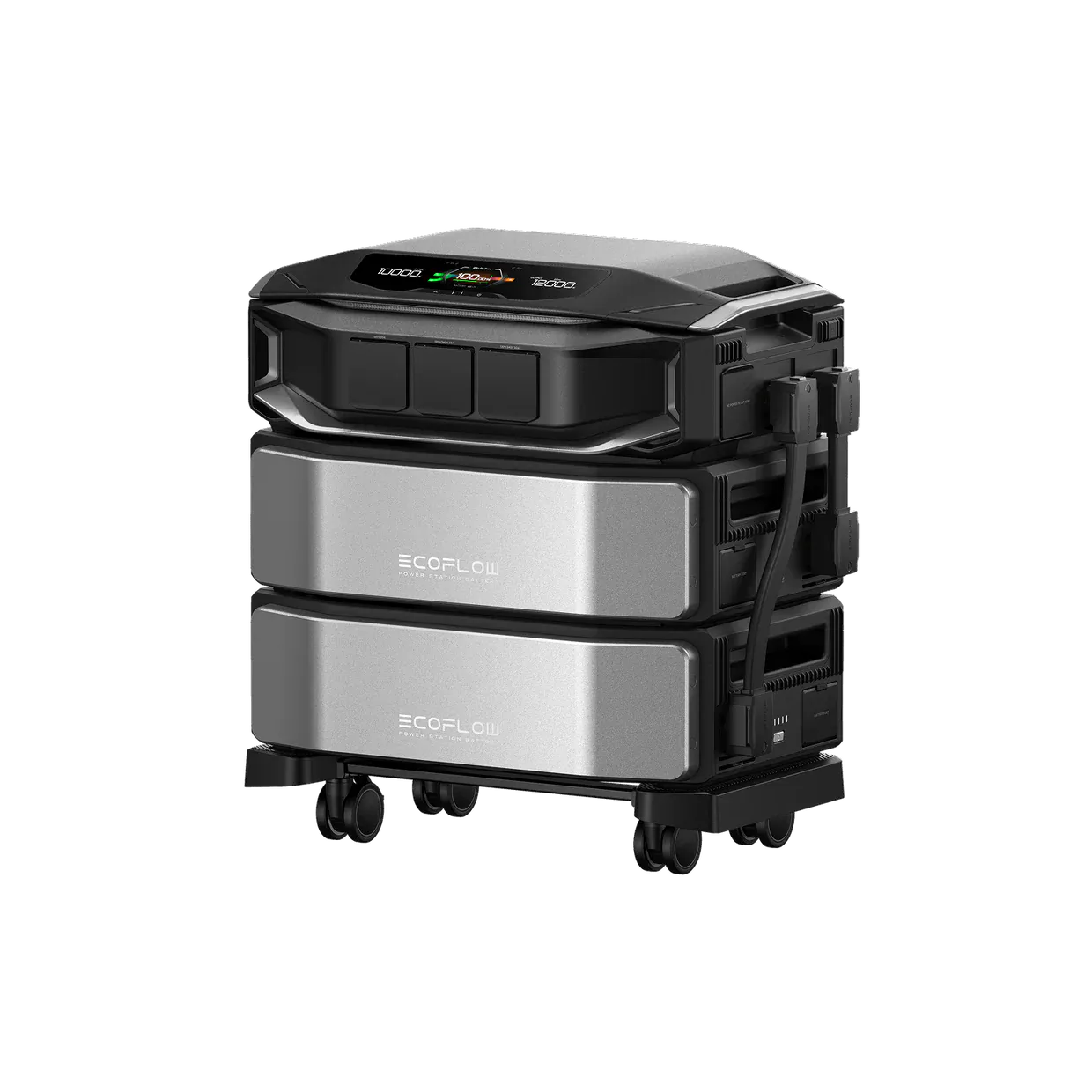
12,000W continuous, 24,000W surge, 6,144 Wh, 120V/240V. The DELTA Pro Ultra X is the only portable-class power station that can start a 3-ton central AC. But even here, the math is tight. The central AC surges to 21,356W. With our 25% compressor buffer, the recommended capacity is 21,356 × 1.25 = 26,695W. The Ultra X’s 24,000W peak falls short of the buffered recommendation, placing this pairing in TIGHT territory, not SAFE. EcoFlow’s Adaptive Start algorithm may help by intelligently ramping power delivery, but this is software-dependent and not guaranteed for all compressor types.
What Voltage Mismatch Actually Does
Running a 240V device on 120V is not merely inefficient. The consequences depend on the type of load.
Power vs voltage for resistive loads
P = V² / R --- Halving voltage quarters the power
Resistive loads (water heater, dryer heating element): Power output drops to approximately 25% of rated capacity. A 5,500W water heater receives roughly 1,375W. The water heats, but at one-quarter the speed. No immediate damage to the element, but the result is functionally useless for its intended purpose.
Motor loads (well pump, AC compressor, dryer drum motor): The motor may not generate sufficient starting torque at half voltage. If it fails to start, it draws locked-rotor current indefinitely, rapidly overheating the windings. This causes permanent damage within seconds to minutes. Never connect a 240V motor to 120V.
Electronic loads with auto-ranging power supplies: Check the nameplate. If it reads “100-240V, 50/60Hz,” the device has an auto-ranging power supply and will work on either voltage. This is common for laptop chargers, phone chargers, and some networking equipment. It is not common for the four 240V device categories listed above.
Practical 120V Substitutes
If your power station outputs 120V only, several 240V devices have 120V alternatives that work well during an outage.
Central AC (240V) to window AC or portable AC (120V). A window AC unit rated at 8,000 BTU draws 710W running with a 2,010W surge at 120V. A portable AC at 12,000 BTU draws 1,357W with a 4,071W surge. Both are compatible with mid-range and larger power stations. They cool a single room rather than the whole house, but during an outage, cooling one room is usually sufficient.
Electric water heater (240V) to electric kettle (120V). A 1,500W electric kettle provides hot water for drinking and basic washing. It draws 1,500W with no surge (pure resistive) and runs on any station rated above 1,500W continuous. Not a substitute for a shower, but a practical stopgap.
Electric clothes dryer (240V) to clothesline. No 120V electric substitute exists at comparable performance. A portable fan aimed at a clothesline accelerates drying. During an extended outage, laundry is a lower priority than refrigeration and climate control.
Well pump (240V) to stored water. No 120V substitute for a deep well pump. Store 1 gallon per person per day as emergency supply. For shallow wells under 25 feet, a hand pump is an option.
For EV owners evaluating 120V versus 240V charging from a power station, see our EV charging guide.
Limitations and Edge Cases
Split-phase versus single-phase step-up. A step-up transformer converts 120V to 240V but produces a single-phase output without a center-tapped neutral. Devices with internal 120V sub-circuits (dryer controls, range clocks, some AC control boards) require the neutral reference that only true split-phase provides. A step-up transformer works for pure 240V resistive loads and some 240V motors, but not for devices that tap 120V internally.
Leg splitting at 240V. When a power station outputs “6,000W at 120V,” its 240V output may deliver only 3,000W per leg. The total 240V capacity depends on how the inverter architecture distributes power across legs. Some stations spec a lower continuous rating at 240V than at 120V. Always check the 240V-specific rating, not the 120V headline number.
Transfer switch constraints. A 30A transfer switch connection at 240V handles a maximum of 7,200W (30A × 240V). Even if the power station is rated higher, the transfer switch becomes the bottleneck. The station must sustain rated output on both legs simultaneously under this configuration.
Neutral bonding. Portable power stations typically use a floating neutral (neutral is not bonded to ground within the unit). Some transfer switches and sensitive equipment expect a bonded neutral. A floating neutral can trigger ground-fault protection devices. If using a transfer switch, verify whether the station or the switch provides the neutral-ground bond.
Frequency stability. The inverter must maintain 60Hz within tight tolerances (typically 59-61Hz). Under heavy load, some inverters exhibit frequency drift. Most 240V motor loads tolerate minor frequency variation, but some electronic controls and compressor protection circuits are sensitive to it.
Frequently Asked Questions
Can I use an adapter to run my 240V dryer on a 120V power station?
No. An adapter changes the plug shape, not the voltage. The dryer receives 120V instead of 240V, producing roughly 25% of rated heat output. The drum motor, which taps 120V from one leg to neutral in a proper split-phase circuit, may not receive correct voltage through the adapter wiring. Risk of overheating and permanent damage is high.
Which portable power stations output 240V?
Five in our database: EcoFlow DELTA Pro 3 (4,000W), Anker SOLIX F3800 (6,000W), Zendure SuperBase V4600 (3,800W), EcoFlow DELTA Pro Ultra (6,000W), and EcoFlow DELTA Pro Ultra X (12,000W). All are priced above $2,000.
Can a portable power station run central air conditioning?
In practice, no. A 3-ton central AC demands 4,060W running and 21,356W surge at 240V. Only the EcoFlow DELTA Pro Ultra X (24,000W surge) comes close, and even that pairing is TIGHT when our 25% compressor buffer is applied (required capacity: 26,695W). For reliable central AC backup, a permanently installed standby generator is the standard solution.
Will running 120V through a 240V device damage it?
It depends on the load type. Resistive loads (heating elements) produce reduced output at roughly 25% of rated power but suffer no immediate damage. Motor loads may fail to start, stall, draw excessive current, and sustain permanent winding damage. Never connect a 240V motor to 120V supply.
Sources and Standards
Device voltage requirements and wattage data are sourced from OEM product pages and installation manuals. Wiring standards reference NEC 2023 Articles 210 (Branch Circuits), 220 (Branch-Circuit, Feeder, and Service Load Calculations), and 250 (Grounding and Bonding). Connector designations follow NEMA WD 6 (Wiring Devices). Generator specifications are sourced from manufacturer product pages.
For a complete explanation of our data sourcing and verification process, see our methodology page.
Related reading
Keep goingEV Charging with a Portable Power Station: How Much Range Can You Get?
A Level 1 EVSE draws 1,440W for 2-5 miles/hour. A 4,000 Wh power station gives you 4-10 miles. Here is the honest math on emergency EV charging.
Running an RV Rooftop AC on a Portable Power Station
RV rooftop ACs demand 1,450-1,788W running and up to 8,856W surge. Find out exactly which portable power stations can handle them, with and without a soft-start module.
Utility