Strengths
- Electronics-grade build quality
- 240V output on F3800
- Wide capacity range
- Competitive pricing on mid-range units
 A
A Specs, lineup depth, and real compatibility outcomes for Anker models tested against 53 household and RV devices.
Anker leverages its consumer electronics expertise with the Solix line. From the ultracompact C300 to the whole-home F3800, their lineup emphasizes build quality and smart features. The F3800 is one of the few units in our database with 240V output.
52 of 53 devices compatible with at least one Anker model
Compact to mid-size models focused on everyday backup, travel, and quiet operation.
Best for
Best for
Best for
Large-format models built for heavy loads, home backup, and split-phase applications.
Best for
As an Amazon Associate, we earn from qualifying purchases. Our methodology
How Anker units perform with the most commonly searched devices.
| Device | Best Anker Match | Verdict | Runtime | Full Report |
|---|---|---|---|---|
| CPAP Machine Medical 56.1W | SOLIX F3800 3,840 Wh battery | Safe | 47.9h | View report |
| French Door Refrigerator Large Appliances 207W | SOLIX F3800 3,840 Wh battery | Safe | 13h | View report |
| Sump Pump (1/2 HP) Emergency 1,127W | SOLIX F3800 3,840 Wh battery | Safe | 2.4h | View report |
| Window AC (8,000 BTU) Heating & Cooling 710W | SOLIX F3800 3,840 Wh battery | Safe | 3.8h | View report |
| Microwave Oven (1000W) Kitchen Appliances 1,920W | SOLIX F3800 3,840 Wh battery | Safe | 1.4h | View report |
Showing best-case results per device. For full results across all 4 models, see individual device guides.
Anker SOLIX is the portable power station line from Anker Innovations. Anker entered this category later than EcoFlow, Bluetti, and Jackery, but they brought a strong hardware track record from the broader consumer electronics market.
In plain buyer terms, Anker is the “balanced” option in many scenarios. You usually do not get the fastest charge speed in every class or the widest model count, but you get solid inverter output, clean industrial design, and a straightforward ownership experience from a large company with established retail and support channels.
This page focuses on what matters in our database: the models we currently test, where they perform well, and where they are not the right fit.
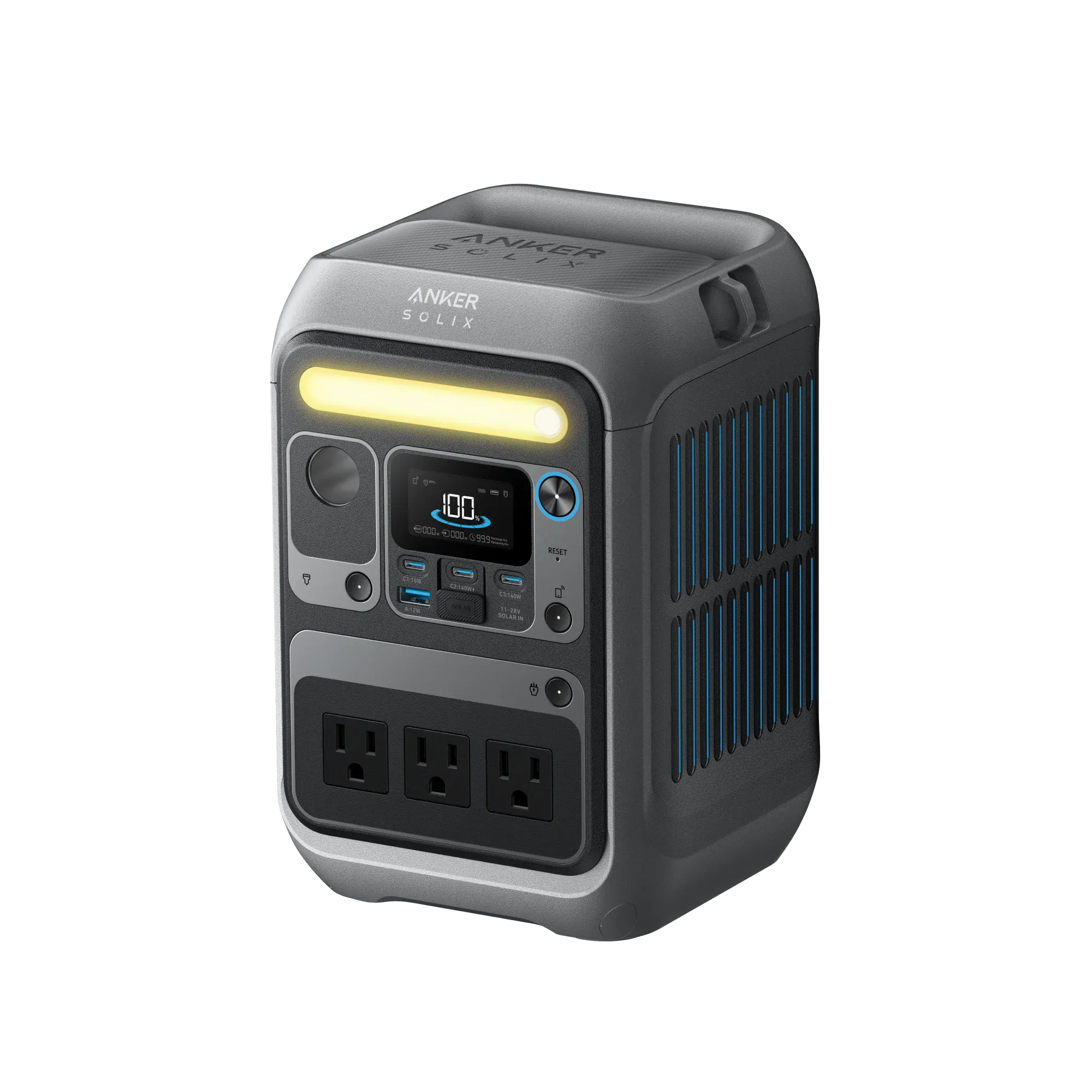
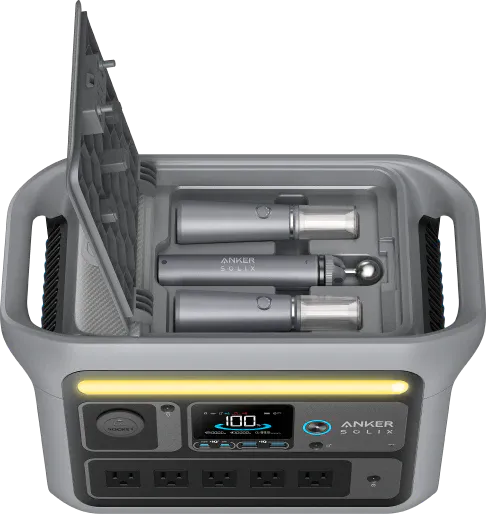
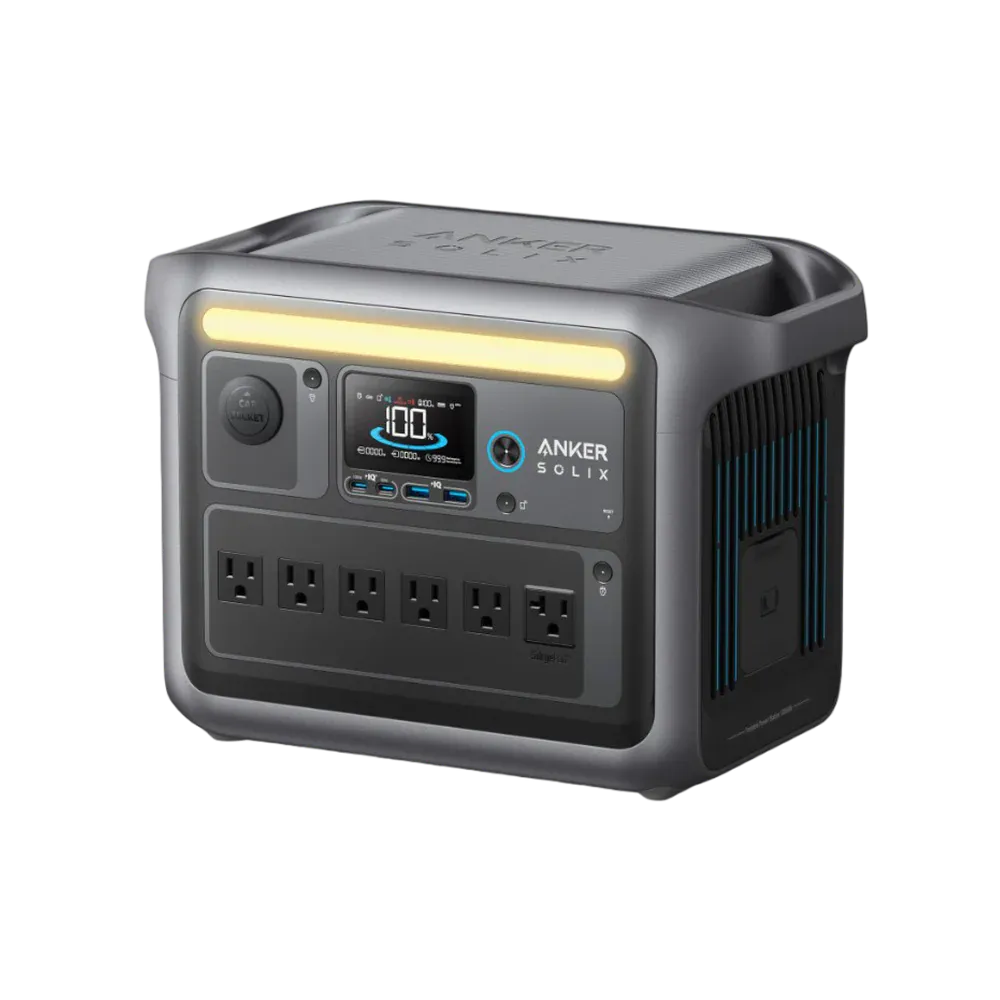
In our tested set, Anker covers a wide practical range:
That span gives Anker usable options from light electronics backup to serious appliance and home-load coverage.
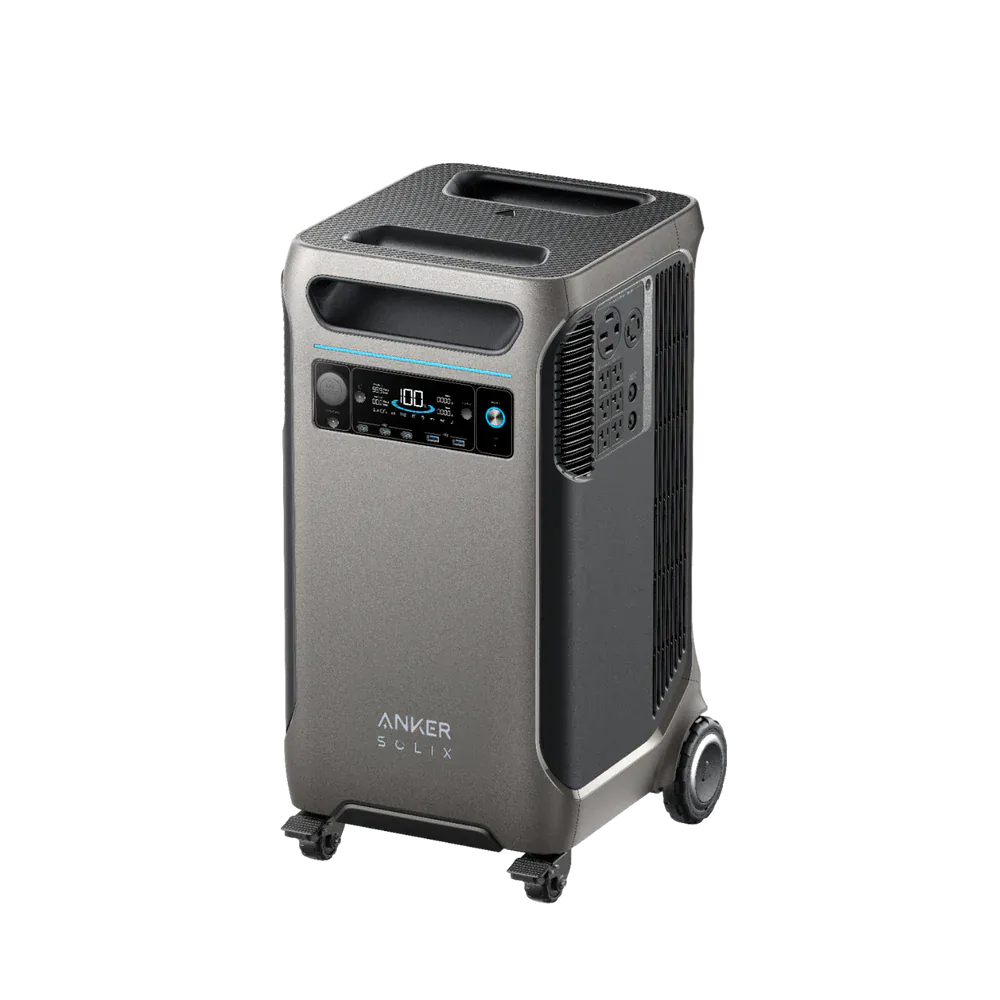
The F3800 is the key differentiator in this lineup because it supports native 120V/240V output. In GeneratorChecker’s compatibility engine, that immediately unlocks classes of devices most 120V-only stations fail on at the voltage gate.
If your target loads include well pumps, central HVAC with proper startup mitigation, or other 240V equipment, the F3800 sits in a different league than compact 120V units.
All Anker models currently in our database use LiFePO4 chemistry. For frequent-use owners, this is the right baseline because it generally improves cycle-life expectations and thermal stability versus older NMC-first portable designs.
Solar headroom scales meaningfully across the line in this dataset:
That makes the C-series practical for partial daytime recovery, while the F3800 can support much more aggressive recharge plans.
Anker’s tested lineup here is leaner than the broader catalogs from EcoFlow and Bluetti. Fewer SKUs can be a plus for simplicity, but it also means fewer exact “in-between” options for shoppers who want a very specific capacity or price point.
Expansion exists in this lineup (C1000 and F3800 are expandable), but ecosystem migration is still more constrained than buyers often expect across very different product tiers. Plan your long-term capacity path before committing to one branch.
If you need split-phase output, your Anker path in this tested set is effectively the F3800. The C-series remains 120V-oriented, which is correct for most portable use cases but not enough for hard 240V appliance classes.
| Model | Capacity | Continuous Output | Peak Surge | Voltage | Solar Input | Expandable |
|---|---|---|---|---|---|---|
| SOLIX C300 | 288 Wh | 300W | 300W | 120V | 100W | No |
| SOLIX C800 Plus | 768 Wh | 1200W | 1600W | 120V | 300W | No |
| SOLIX C1000 | 1056 Wh | 1800W | 2400W | 120V | 600W | Yes |
| Anker SOLIX F3800 | 3840 Wh | 6000W | 9000W | 120V/240V | 2400W | Yes |
Quick read from the dataset:
Anker is a strong choice if:
Look elsewhere first if:
Every Anker model is tested with the same True Surge protocol we apply across all brands. We validate compatibility with continuous output, surge capacity, battery runtime math, and voltage requirements. For 240V-required loads, voltage gating is enforced first.
In other words: the F3800 earns its 240V advantage through actual voltage capability checks, not marketing mode names.
For full details, see our Methodology page.
Sources: Anker SOLIX model specifications from official manufacturer documentation and product pages represented in this site’s generator database (accessed February 2026). Compatibility verdicts on this page are generated from GeneratorChecker’s True Surge protocol.
Side-by-side comparisons between nearby Anker models.