1
Voltage Gate
FAILDevice output type must match generator output.
240V required -> 120V available
No - voltage mismatch. The Central AC (3-Ton) needs 240V output, but the generator provides 120V.
Same decision gates as the engine: voltage, running, surge. Runtime is shown as operational context.
Blocking reason: voltage mismatch. Downstream gates are paused until voltage is compatible.
Device output type must match generator output.
240V required -> 120V available
Continuous draw with safety buffer applied.
Blocked by voltage mismatch.
Startup peak with safety buffer applied.
Blocked by voltage mismatch.
Runtime context only. It does not change the electrical compatibility verdict.
N/A due to voltage mismatch.
Power bars show required versus available output for each gate.
Find a compatible generatorQuick compatibility, required headroom, and model-specific context at a glance.
0 of 3 models are SAFE or TIGHT. Most demanding model: Goodman GSXN4 03610A (3-Ton, 14.3 SEER2) (21,356W surge).
| Model | Running | Surge | Verdict | Runtime | Source |
|---|---|---|---|---|---|
| Goodman GSXN4 03610A (3-Ton, 14.3 SEER2) | 3,899W | 21,356W | Voltage Fail | — | OEM Manual |
Show expert analysisTechnical: **Running load:** 3899W from compressor RLA (16.0A) + condenser fan FLA (0.95A) at 230V. **Startup surge:** 21356W from compressor LRA (91.9A) + fan FLA at 230V. **Voltage:** 240V split-phase required. Single-stage scroll compressor with PSC condenser fan motor. Field note: The GSXN4 is Goodman's entry-level SEER2 condenser (14.3 SEER2). At 91.9A LRA, most consumer portable power stations cannot start this unit without a hard-start kit. Even with a soft-start kit, the reduced surge (~9,610W) typically exceeds consumer inverter limits. Can any portable power station start a Goodman 3-ton central AC? The 21,356W startup surge exceeds most consumer portable power stations. A soft-start kit reduces inrush but still requires approximately 9,610W surge capacity at 240V. | |||||
| Trane 4TWR4036D (3-Ton, XR14 Heat Pump) | 4,060W | 18,389W | Voltage Fail | — | OEM Manual |
Show expert analysisTechnical: **Running load:** 4060W from compressor RLA (16.7A) + condenser fan FLA (0.95A) at 230V. **Startup surge:** 18389W from compressor LRA (79A) + fan FLA at 230V. **Voltage:** 240V split-phase required. Climatuff scroll compressor with PSC condenser fan motor. Field note: The Trane XR14 heat pump operates identically to an AC condenser in cooling mode. Its 79A LRA is lower than Goodman's 91.9A but still typically beyond consumer portable power station surge limits. This unit is unlikely to run on portable power without a soft-start kit and a large 240V inverter. Is the Trane XR14 easier on a generator than the Goodman GSXN4? Lower startup surge (18,389W vs 21,356W) but higher running watts (4,060W vs 3,899W). Both remain far beyond portable power station limits without a soft-start kit. | |||||
| Lennox SL28XCV-036 (3-Ton, 28 SEER Variable-Speed) | 3,404W | 5,106W | Voltage Fail | — | Engineering Est. |
Show expert analysisTechnical: **Running load:** 3404W from compressor input (12A) + condenser fan FLA (2.8A) at 230V. **Estimated startup surge:** 5106W at 1.5x running — no traditional LRA because the SL28XCV uses a variable-speed inverter compressor that ramps gradually. **Voltage:** 240V split-phase required. Field note: The SL28XCV's inverter compressor eliminates the massive LRA spike that makes conventional central AC impossible for portable power. At ~5,106W estimated surge, this is the only 3-ton variant in this set that could theoretically be started by a large consumer power station with 240V output. However, 3,404W continuous draw still demands substantial battery capacity. Why does this Lennox have so much lower startup surge than other 3-ton units? The SL28XCV uses a variable-speed inverter compressor that ramps up gradually instead of hard-starting. This eliminates the 79-92A locked-rotor inrush of conventional scroll compressors, reducing estimated surge from ~20,000W to ~5,100W. | |||||
This unit is outside the compatible set; 1 of 33 generators pass SAFE/TIGHT for this device.
1 of 33 generators are SAFE+TIGHT for Central AC (3-Ton).
Fit class uses buffered needs (running and surge) for this device.
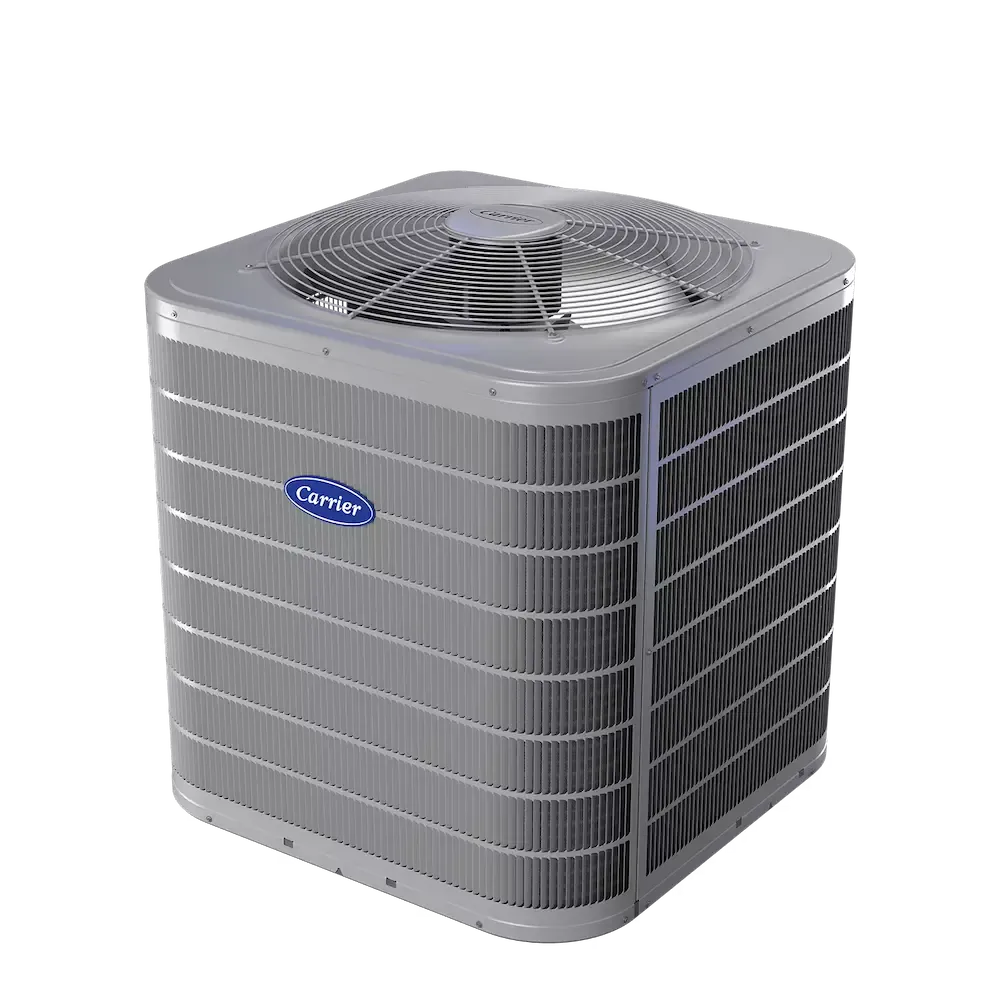
Whole-Home Cooling
Select Your Model:
This device typically needs 240V split-phase or a hardwired connection. Most portable stations are 120V-only. Verify the plug type and voltage on the device label/manual before purchase.
These systems are often hardwired to a home panel. To run them from a portable station, you may need a transfer switch installed by an electrician. You cannot just plug it in.
No compatible portable stations found
Your device requires more voltage or surge capacity than any unit in this catalog.
Use the full calculator →Free Tools
The 7000W surge rating handles demanding startup loads including well pumps, air compressors, and window AC units. The dual 1200W MPPT controllers accept high-voltage panel strings (up to 150V), enabling efficient solar recharging in 1.5–2 hours with 2400W of panels. At 3072Wh base capacity, expect 8+ hours of runtime on moderate loads. The expansion to 15kWh rivals whole-home battery systems.
The E3600LFP uses LiFePO4 chemistry rated for 3,500+ cycles to 80% capacity. The 51.2V battery architecture and UPS function (8–20ms switchover) make it suitable for sensitive electronics and home backup. The TT30-R RV outlet follows NEMA standards for safe 30A connections. Source: Pecron official US product page (manufacturer documentation).
No. The Central AC (3-Ton) requires 240V output, but the Pecron E3600LFP provides 120V only. No amount of extra wattage can fix a voltage mismatch — you need a power source with 240V split-phase output.
No reliable runtime estimate — this pairing is not compatible. The Pecron E3600LFP cannot safely power the Central AC (3-Ton). See compatible alternatives above for power stations that meet this device's requirements.
Power Tip: To get the most out of your Pecron E3600LFP, keep it in a well-ventilated area. Extreme temperatures can slightly reduce the efficiency of the LFP/NMC cells.
Compare all 33 generators for the Central AC (3-Ton)
Ranked by budget, runtime, and overall compatibility.
Derived from variant list (max of variants). Running worst case = Trane 4TWR4036D (4060W). Surge worst case = Goodman GSXN4 03610A (21356W).
Pecron E3600LFP Official Product Page (US) — full specifications