1
Voltage Gate
PASSDevice output type must match generator output.
120V required -> 120V available
1 of 3 models are compatible with this generator.
Jump to model-specific results ↓Same decision gates as the engine: voltage, running, surge. Runtime is shown as operational context.
Device output type must match generator output.
120V required -> 120V available
Continuous draw with safety buffer applied.
1,813W to 2,235W required -> 3,600W available (1,365W to 1,787W headroom)
Startup peak with safety buffer applied.
6,124W to 11,070W required -> 7,200W available (1,076W headroom on lighter models)
Alternative startup path with reduced inrush.
4,982W required -> 7,200W available (2,218W headroom)
Runtime context only. It does not change the electrical compatibility verdict.
Continuous estimate: 1.4h
Device profile reference: up to 6h per day.
Power bars show required versus available output for each gate.
View full compatibility reportQuick compatibility, required headroom, and model-specific context at a glance.
1 of 3 models are SAFE or TIGHT. Most demanding model: Dometic Brisk II B57915.71X (13,500 BTU) (8,856W surge).
| Model | Running | Surge | Verdict | Runtime | Source |
|---|---|---|---|---|---|
| Dometic Brisk II B57915.71X (13,500 BTU) | 1,788W | 8,856W | Soft Start | ~1.4h | OEM Manual |
Show expert analysisTechnical: This 13,500 BTU rooftop unit is a high continuous compressor load. Using OEM current and locked-rotor values, modeled running demand is 1788W with OEM-derived startup demand at 8856W. Field note: For RV battery systems, this is a realistic upper-bound 13.5k BTU profile to test first before selecting any smaller rooftop AC model. Can a portable power station run a 13,500 BTU RV rooftop AC? Only if it can cover this profile at 120V: 1788W running and 8856W startup (or equivalent soft-start handling). In practice, startup headroom is usually the limiting factor. | |||||
| Coleman-Mach 8 Plus (13,500 BTU) | 1,633W | 4,899W | Safe | ~1.5h | NEC Standard |
Show expert analysisTechnical: Coleman-Mach 8 Plus sits in the same rooftop AC class but with slightly lower modeled continuous draw than the Dometic worst case in this set. Field note: Treat this as a serious RV cooling load, not a light camping appliance. Prioritize surge headroom before runtime calculations. Can a portable power station run a 13,500 BTU RV rooftop AC? Only if it can cover this profile at 120V: 1788W running and 8856W startup (or equivalent soft-start handling). In practice, startup headroom is usually the limiting factor. | |||||
| Airxcel Mach 10 45203-8*6 (13,500 BTU) | 1,450W | 7,245W | Soft Start | ~1.7h | OEM Manual |
Show expert analysisTechnical: Mach 10 provides an OEM direct running watt value in the 13.5k BTU class, making it a useful mid-range benchmark for RV rooftop cooling. Field note: When comparing stations, check both sustained inverter output and startup tolerance. One without the other is not sufficient for rooftop AC duty. Can a portable power station run a 13,500 BTU RV rooftop AC? Only if it can cover this profile at 120V: 1788W running and 8856W startup (or equivalent soft-start handling). In practice, startup headroom is usually the limiting factor. | |||||
This unit is borderline without mitigation; 3 of 33 generators meet SAFE/TIGHT margins for this device.
3 of 33 generators are SAFE+TIGHT for RV Rooftop AC (13,500 BTU).
Fit class uses buffered needs (running and surge) for this device.
RV Rooftop Cooling (Boondocking)
Select Your Model:
RVs often use a 30A plug. If the station only has standard outlets, you may need an adapter and will be limited to standard outlet power (~1800W).
Free Tools
The 7200W surge capacity can support typical motor-driven appliances during startup, including air compressor motors, well pumps, and refrigeration units that demand brief high-current events. The 3600Wh capacity provides extended runtime for moderate loads, though actual performance depends on connected equipment and environmental conditions. This unit can handle typical whole-home essentials when loads are properly managed.
The Delta Pro uses LFP chemistry, a lithium iron phosphate formulation widely recognized for thermal stability in residential applications. The manufacturer provides operational guidance in their documentation, but users must follow all installation and usage instructions to minimize risk. Source: EcoFlow DELTA Pro User Manual v1.1 (manufacturer documentation).
Keep your RV Rooftop AC (13,500 BTU) running with solar • MPPT: 11– 150V • Max: 1600W
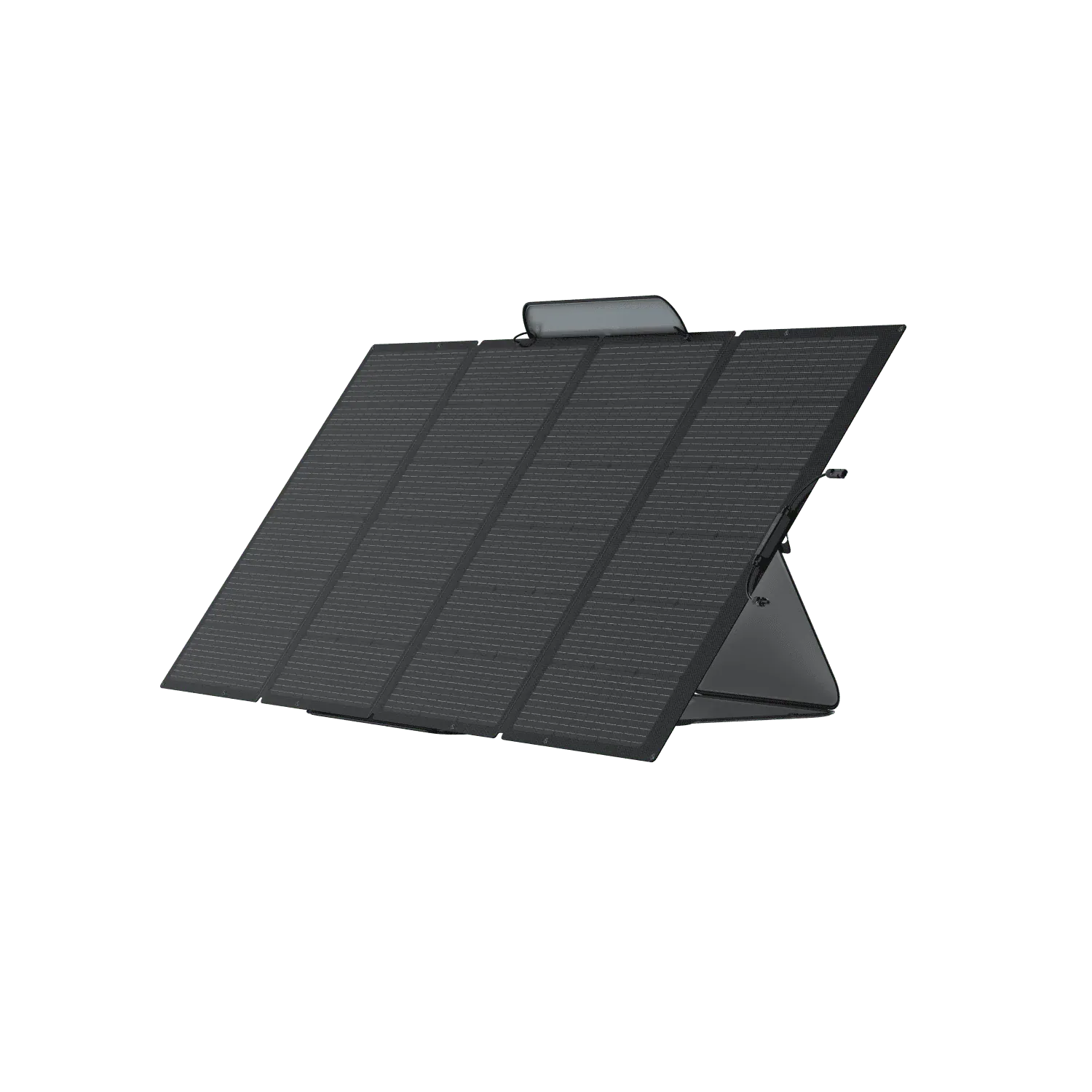 Official
 400W Panel
Adapter required: MC4 -> XT60i.
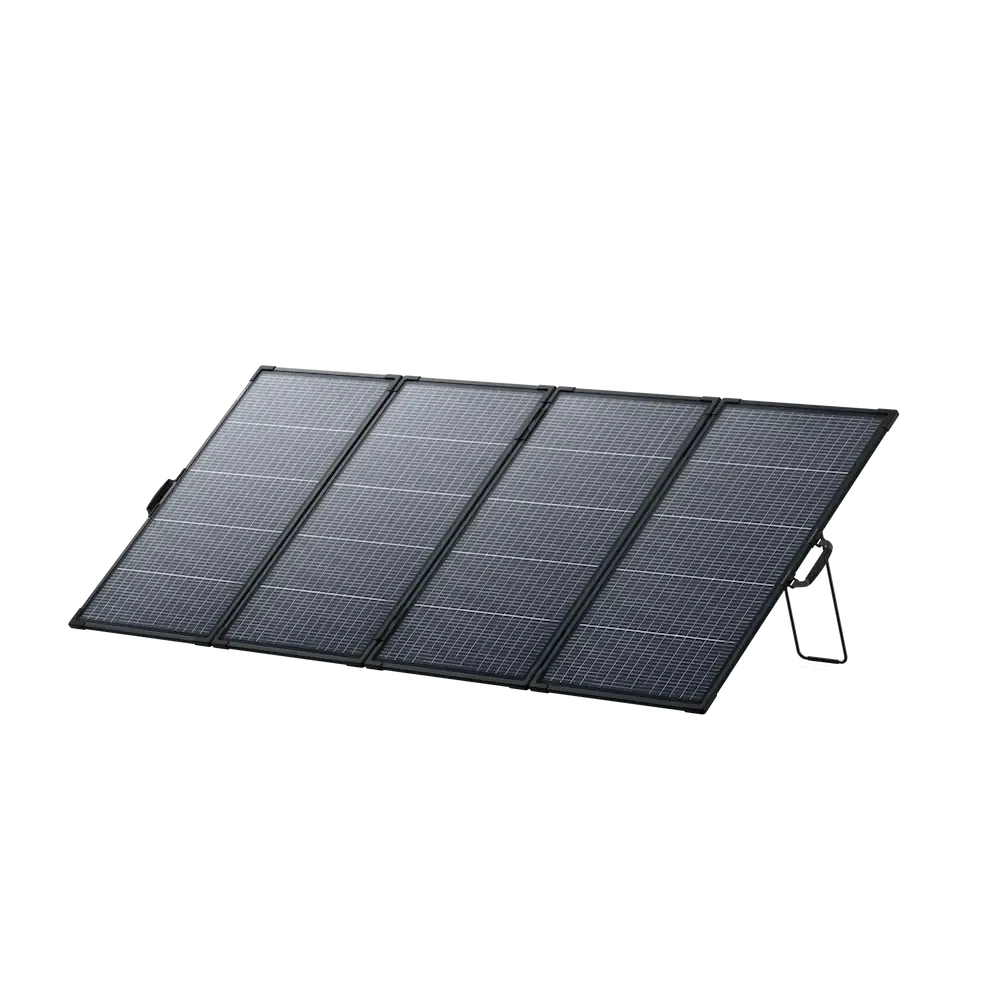 Smart Value
 400W Panel
Adapter required: MC4 -> XT60i.
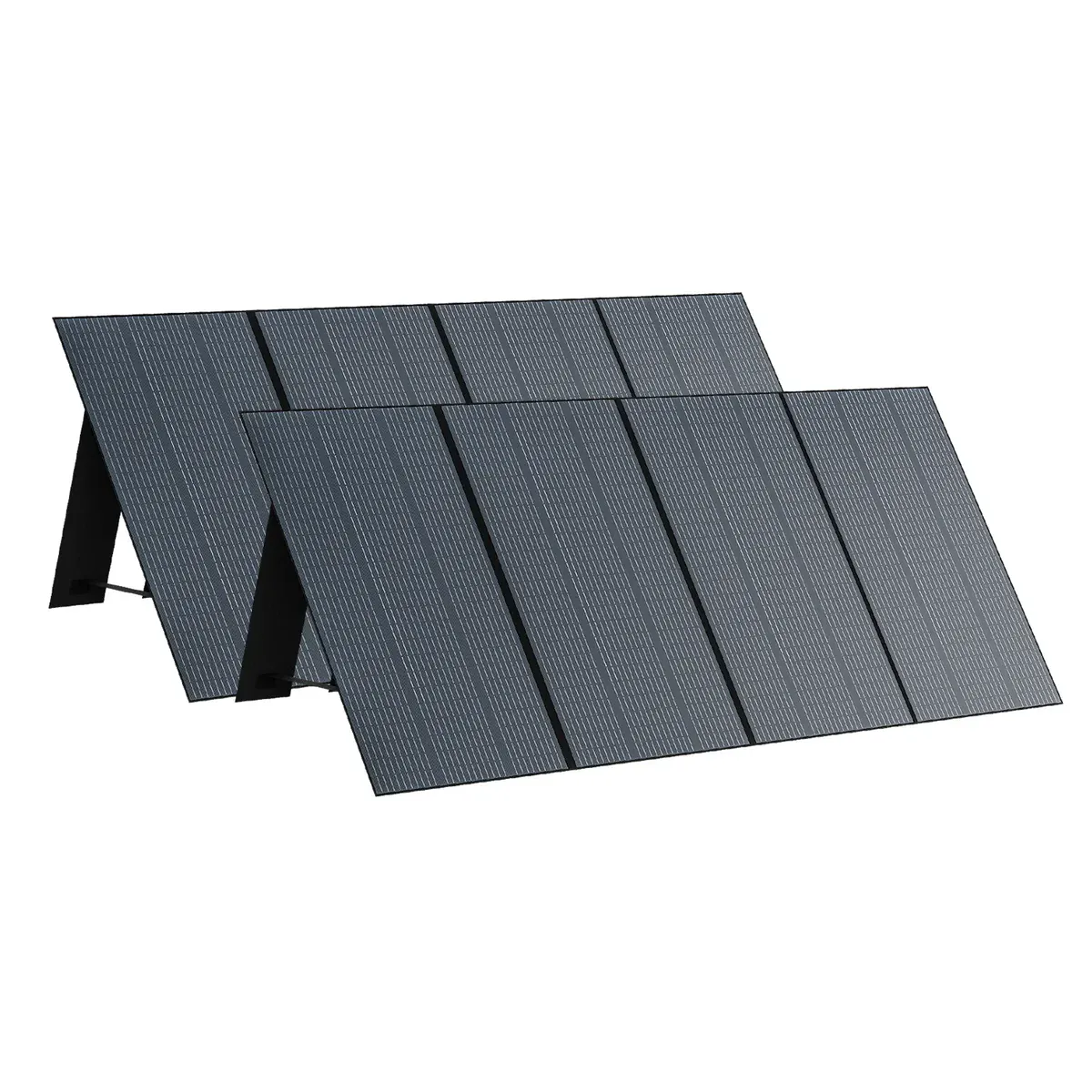 Smart Value
 350W Panel
Adapter required: MC4 -> XT60i.
It depends on the model. 1 of 3 RV Rooftop AC (13,500 BTU) models are compatible with the EcoFlow Delta Pro. See the model-specific results table for exact verdicts per model.
It depends on the model. Compatible models run approximately 1.4–1.7 hours on the Delta Pro. 0 of 3 models are not compatible. See the model-specific results for details.
With 1045W allocated to the RV Rooftop AC (13,500 BTU), the Delta Pro still has ~47W of margin. These devices could run simultaneously:
Power Tip: To get the most out of your Delta Pro, keep it in a well-ventilated area. Extreme temperatures can slightly reduce the efficiency of the LFP/NMC cells.
Compare all 33 generators for the RV Rooftop AC (13,500 BTU)
Ranked by budget, runtime, and overall compatibility.
Derived from variant list (max of variants). Running worst case = Dometic Brisk II B57915.71X (1788W from 120V x (12.4A compressor + 2.5A fan)). Surge worst case = Dometic Brisk II B57915.71X (8856W from 120V x (68.0A compressor LRA + 5.8A fan locked rotor amps) from OEM table).
EcoFlow DELTA Pro User Manual v1.1
Similar-output alternatives you can compare side by side.